How many control methods does a high speed roller shutter really have? Four. The most common setups are a wired control box with linked control, a wireless remote (usually 433 MHz) with a handheld transmitter, and an external system such as an automatic roller shutter release run by an embedded controller or a computer that reads the plate number and opens the shutter on its own.
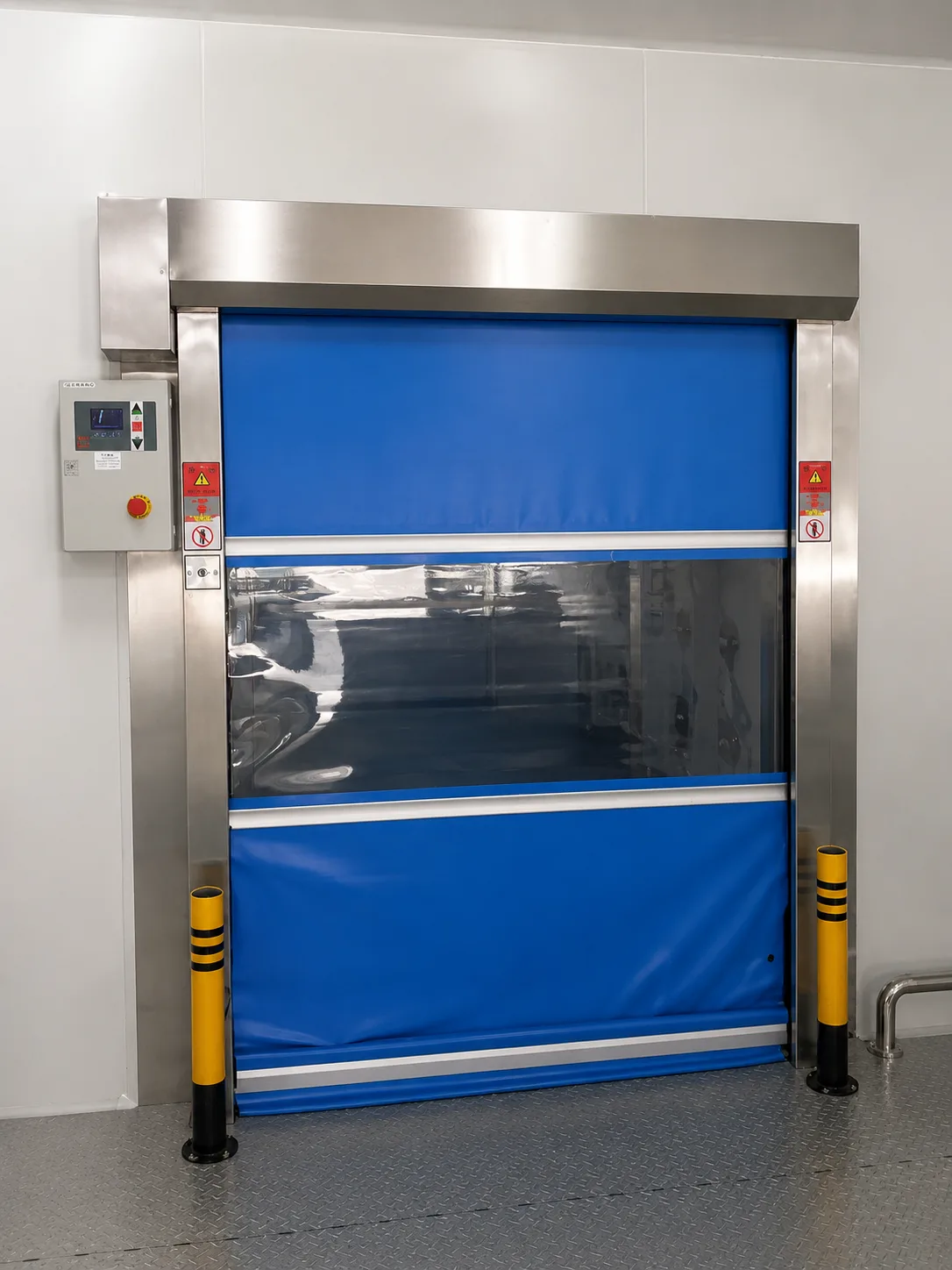
Rapid Roller Door Control Methods
Here are the four parts that make up the control side of the door.
1. Transformer. The transformer is the simplest electrical part in a roller shutter. On higher-end models we add a fuse at the transformer output. If the motor overloads, the fuse trips and protects the controller — that is what keeps the whole system safe.
2. Drive motor and overheat protection. The drive motor is where speed and force come from. High-end roller shutters use brushless variable-speed motors: high power, adjustable speed. A speed encoder on the drive motor holds the open-close speed accurate, and the overheat protector is what gives the controller a longer working life.
3. Lock. The lock is the base of door control and access. Roller shutters use two lock types. Ordinary ones use an electromagnetic lock working through a toothed belt; heavier ones use an electromechanical lock on the door hanger. The lock must signal the controller when it is engaged, so the door does not restart from inside and damage the operator. To work with an access system, the controller has to coordinate the unlock and open actions. On high-end doors the unlock signal fires 0.1 second before the open signal — important for roller shutters. If those two actions are not sequenced and the door locks while level, faults are easy. That is why low-level roller shutters that need locking get a dedicated circuit module.
4. Controller. The controller is the heart of the roller shutter. Its development tracks industrial automation and chip design, moving from analog circuits to microprocessors. Digital program control is what lifted modern roller shutters to a new level across the board.
High-Speed Roller Shutter Installation
- Place the control box inside the attendant room — that is the device that works the roller shutter switch.
- Run 220V power down to the bottom of the control box. Add a ground wire (about 1.37 mm²) with leakage protection, laid in PVC conduit.
- Reserve a 32 mm PVC pipe from the bottom of the control box, down below floor level and out through the wall, ending about 0.1–0.15 m below floor at the track. This is for future outdoor lines to enter.
- From the table, take the opening length. When building the opening, keep the clear inside width at least 0.75–0.8 m. Clear height is at least door height + 0.25 m for a normal door, or + 0.1 m for a deluxe door. At the top inner end, leave a service hole 0.4 m wide by 0.6 m high. If you can, add 0.2–0.3 m to the total opening length so the service hole becomes a small door for later electric-line maintenance.
- Before laying track, leave about 0.8–0.9 m width clear and do the ground on both sides first. Wait 2–3 days (5–7 in winter), then lay the track and have the civil works do the track ground at the same time. Keep traffic off the surface while laying, or the track bends.
- Install the roller shutter, connect the lines, and test the switch control box.
High Speed Shutter Power Outage Fix
A high speed roller shutter runs on 220V and leans on the controller for every move. When the supply drops, the door needs a defined fail-safe so it does not sit half-open across a doorway. On RHIDOOR units the curtain holds position or descends under spring force, and a manual crank lets you operate it by hand until power returns. Build that into your spec and the high speed shutter power outage fix is settled before you install.
Explore the Range
Related Articles
- Fire Rated Shutter Control Box: Notes and Wiring
- Repair Methods for Different Roller Shutter Types
- What to Do When a High-Speed Shutter Won’t Start or Loses Power
- Quick Guide to Pairing Your Roller Shutter Remote
Talk to Our Engineers
You don’t need a big order to move fast — we take orders from 1 pc and ship within 15 days, every time.
Ready to specify a high speed roller shutter for your site? Our engineers will walk you through the right control method and the installation plan. RHIDOOR builds to order with a 15-day lead time and sends an engineer for on-site guidance — you get installation, not just a box at the dock. Reach us at +86 18938501256, WhatsApp wa.me/8618938501256, or email ruihua@rhidoor.com.