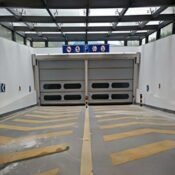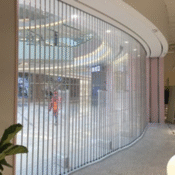

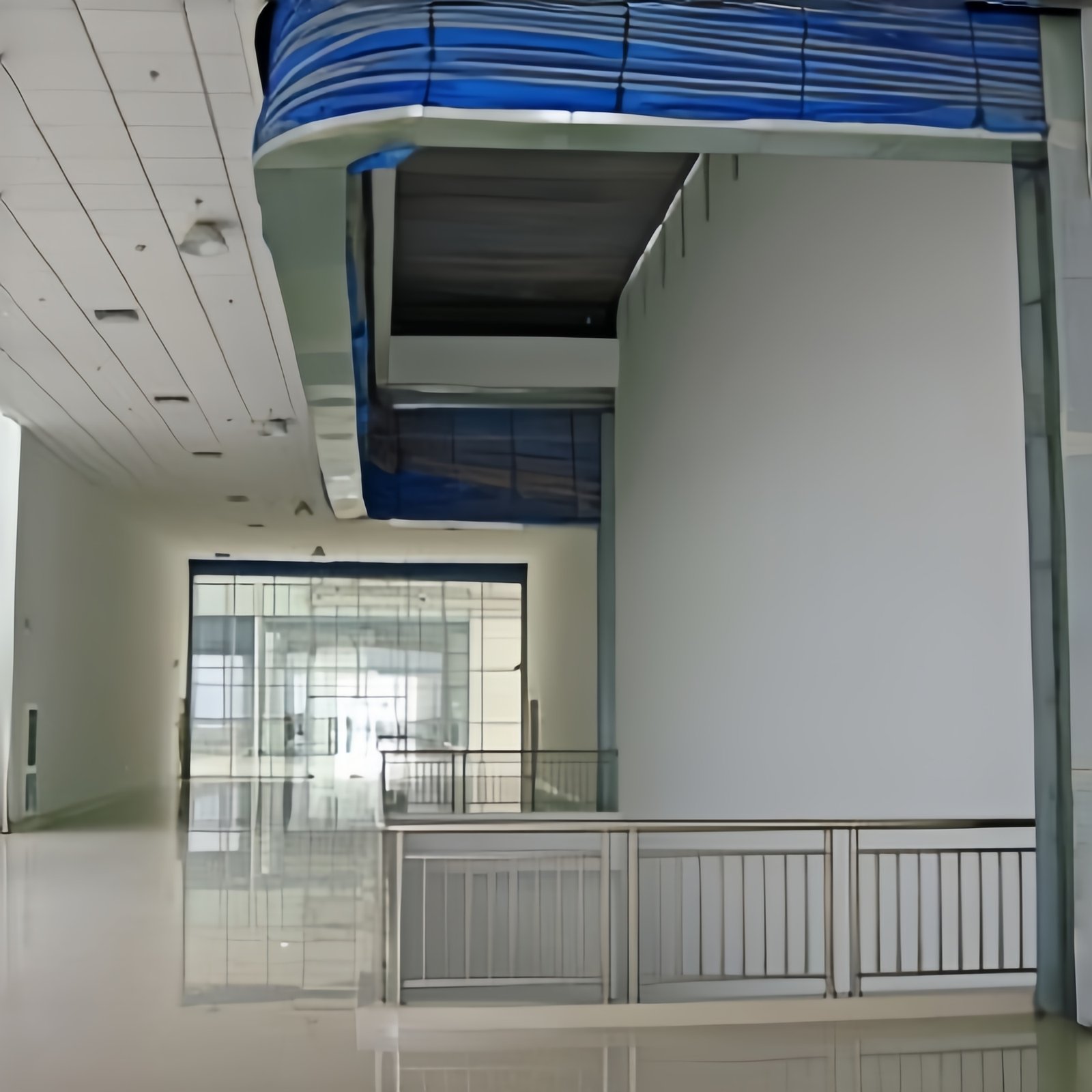
The placement of fire shutters is not arbitrary; it must comply with specific regulations. The key requirements are outlined below:
① Based on Security and Fire Safety Design: According to architectural security and fire protection design standards, fire shutters must be installed not only in fire walls but also between two fire compartments where a fire wall is absent.
② Common Installation Locations: Fire shutters are typically installed in: enclosed stairwells leading to corridors; enclosed elevator lobbies leading to anterooms and corridors; access doors for vertical shafts such as cable shafts, garage door pipe shafts, smoke exhaust ducts, and garbage chutes.
③ Replacement for Fire Walls/Doors: Buildings are generally divided into fire compartments with controlled areas. Doors in firewalls and fire partition walls are required based on floor area. When installing a firewall or fire door is impractical, a fire shutter may be used instead, provided it is protected by a water curtain. Relevant regulations also require fire and smoke resistant partition doors for unit separation.
④ Backup Power and Safety Features: As per standard authorities, fire shutters must be equipped with backup power to function during main power failure. A fusible link must be installed within the assembly, designed to melt and trigger closure when a specific temperature is reached.
⑤ Use of High-Grade Fire Shutters: These are primarily used for rapidly establishing fire separations, often in large spaces. As visible barriers, they are usually painted in highly visible colors during manufacturing. This ensures they remain decorative when retracted while providing clear guidance during a fire, using prominent and penetrating colors to indicate escape routes and buy valuable time for evacuation.
⑥ Minimizing Daily Disruption: In their daily retracted state, fire shutter installations must be designed to minimize interference with normal activities and circulation.
⑦ Balancing Function and Usability in High-Rises: In high-rise buildings, the selection and arrangement of effective fire separation zones using high-grade shutters are crucial for achieving intended performance. A balance must be struck between unimpeded normal use and effective fire compartmentalization.
⑧ Area Limitations and Specifications: The total maximum area covered by fire shutters should not exceed the permitted floor area for the building’s fire compartment classification. If openings above and below are protected by fire shutters or water curtains with a fire resistance rating greater than 3.00 hours, their areas need not be combined. Hallways or corridors connecting rooms to atriums must be separated by Class B fire doors or fire shutters with a fire resistance rating greater than 3.00 hours.
In conclusion, the installation of fire shutters plays a vital role in protecting life and property by providing effective fire separation. However, their placement is not about quantity but requires scientific calculation and careful design based on the building’s layout and usable area.
The above information is provided by REHIDOOR to assist clients considering fire shutter purchases. For further details, please feel free to contact us – we are dedicated to serving your needs.