The single most expensive mistake in door specification is buying a standard roller shutter for an opening that the fire plan requires to be rated. It looks identical on the quote, it installs the same way, and it passes inspection — until the day it matters, when a standard PVC or aluminum curtain melts or collapses in minutes and the “compartment” becomes a chimney. This article gives you a repeatable framework to decide, opening by opening, whether you need a fire-rated shutter or a standard one.
A fire-rated roller shutter is a certified, tested closure (to GB 14102-2005) that holds back fire for a defined period — 0.5h to 3.0h — and may add smoke or insulation control. A standard roller shutter is any non-rated closure for security, climate, or traffic: aluminum, steel, PVC high-speed, or crystal. You need fire-rated only where the opening sits on a fire compartment boundary; everywhere else, a standard door is the right, cheaper answer.
This is the upgraded, decision-first version of our original fire-rated vs ordinary roller shutter comparison. Use the framework below, then follow the links to size and specify.
Key takeaways
– Need fire-rated only on fire compartment boundaries — not on every opening.
– Fire-rated adds cost and weight but delivers a certified resistance time (0.5h–3.0h).
– Standard shutters win on speed, visibility, weight, and price for non-rated openings.
– The decision is a code question first, a budget question second — the fire plan decides.
– Many sites need both: a fire-rated shutter on the boundary, a standard high-speed door behind it for daily traffic.
The Framework in One Page
Work the five steps in order. Steps 1–2 decide if you need fire rating; steps 3–5 decide which one.
- Locate the opening on the fire plan. Is it on a compartment line, evacuation route, or protected escape? → fire-rated. Otherwise → standard.
- Confirm the required resistance time. Pull the rating (0.5h/1.0h/1.5h/2.0h/3.0h) from the code or fire consultant.
- Pick the performance class. Integrity only (E), or add insulation (I) and smoke control (S) if the boundary protects occupied space.
- Choose the family. Steel (GFJ), composite (WFJ), or super (TFJ). See types of fire-rated roller shutters.
- Specify the standard door for the same opening’s daily use, if traffic is high — they are not mutually exclusive.
Fire-Rated vs Standard: Side-by-Side
| Factor | Fire-Rated Roller Shutter | Standard Roller Shutter |
|---|---|---|
| Purpose | Life safety / compartmentalization | Security, climate, traffic |
| Standard | GB 14102-2005 (+ GB/T 7633 test) | None required |
| Resistance time | 0.5h–3.0h certified | None (melts/collapses in fire) |
| Typical materials | Steel, inorganic composite, super | Aluminum, steel, PVC, crystal |
| Weight / motor | Heavier barrel, reinforced lintel | Lighter; standard structure |
| Cost | Higher per m² | Lower per m² |
| Speed | Slower drop, safety-rated | Can be high-speed (PVC) |
| Where required | Compartment boundaries, escapes | All other openings |
Step 1–2: Is the Opening on a Compartment Boundary?
This is the only question that matters at the start. Fire compartment boundaries are the lines drawn on the fire-engineering drawings that keep a fire in one zone. They appear at:
- Factory & warehouse spans — between storage and production, or across large floors (where to place fire-rated roller shutters).
- Malls & supermarkets — tenant boundaries and escalator voids.
- Underground garages — the line to occupied floors.
- Stairwells & equipment rooms — smaller 0.5h–1.5h units.
If your opening is not on one of these lines — a shopfront, a delivery door in a non-rated wall, a clean-room interface — a standard shutter is correct and cheaper. Our complete fire-rated roller shutter guide explains the boundary concept in depth.
Story: A facility manager in Cebu specified fire-rated shutters on every opening of his new workshop — including a non-rated partition wall between two offices. He paid roughly double on those two doors for a rating the fire plan never asked for. When RHIDOOR’s engineer reviewed the drawing, they moved those two to standard aluminum shutters and reinvested the saving in a 3.0h super shutter on the one boundary that actually needed it. Same total budget, far better protection where it counted.
Step 3: Which Performance Class?
Once fire-rated is required, decide what the curtain must actually do:
- Integrity (E) only — blocks flame and hot gas. Fine for many industrial compartments.
- Insulation (I) — keeps the unexposed face cool. Needed where heat on the safe side would ignite or cook contents.
- Smoke control (S) — limits smoke leakage (≤0.2 m³/m²·min). Needed on escape routes and occupied-floor boundaries.
A super shutter (TFJ) delivers E + I + S and is the safe default for mixed-risk buildings. The codes behind these are in our fire-rated roller shutter parameter classification and what materials fire-rated shutters are made of.
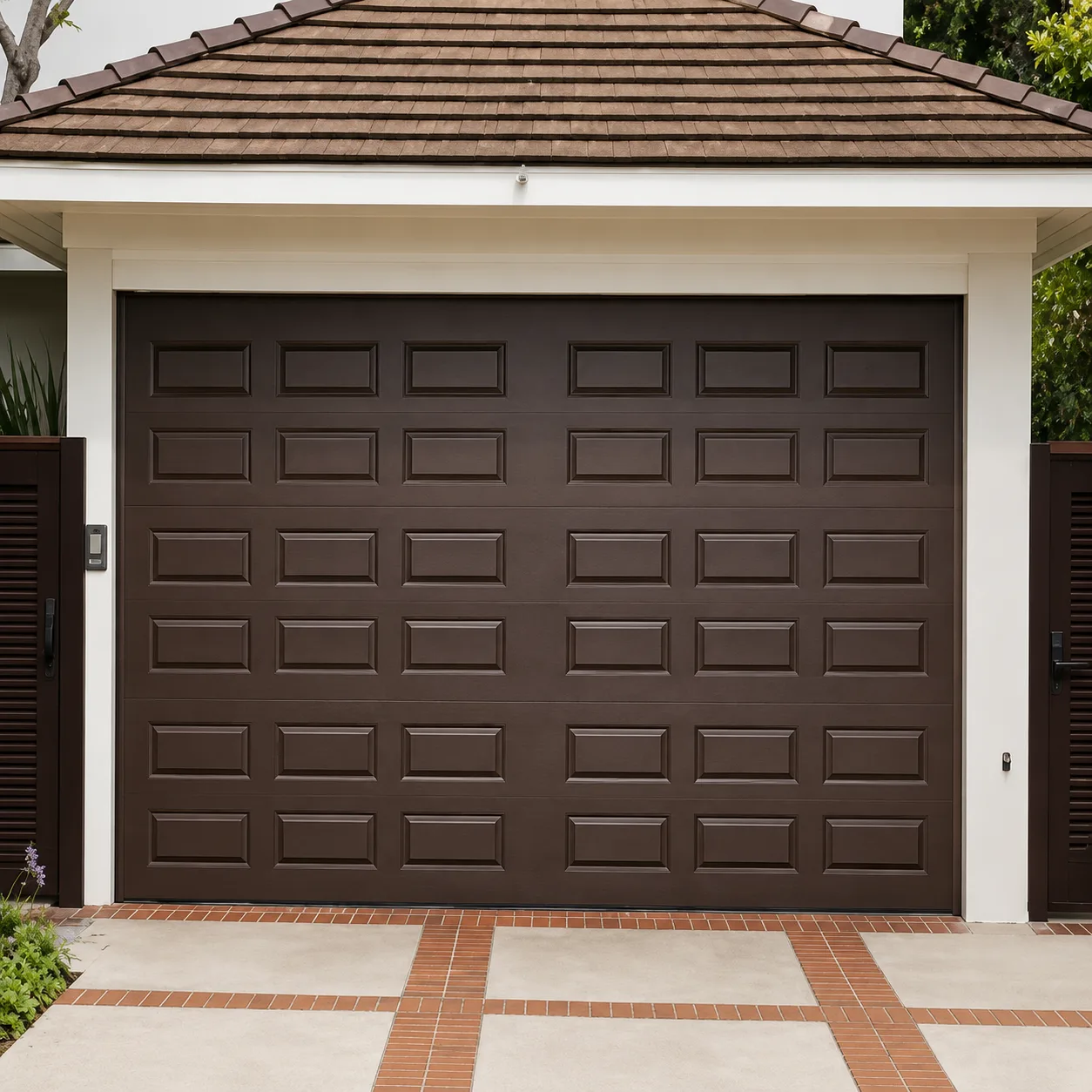
Step 4–5: Fire-Rated AND Standard on the Same Opening?
Often, yes. A boundary opening needs a fire-rated shutter for the fire plan, but the same opening may see forklift traffic every few minutes. A fire-rated steel shutter is slow and not built for high cycle rates. The solution: install the fire-rated shutter on the boundary, and a standard high-speed PVC door just behind it for daily traffic. Each does the job it is rated for.
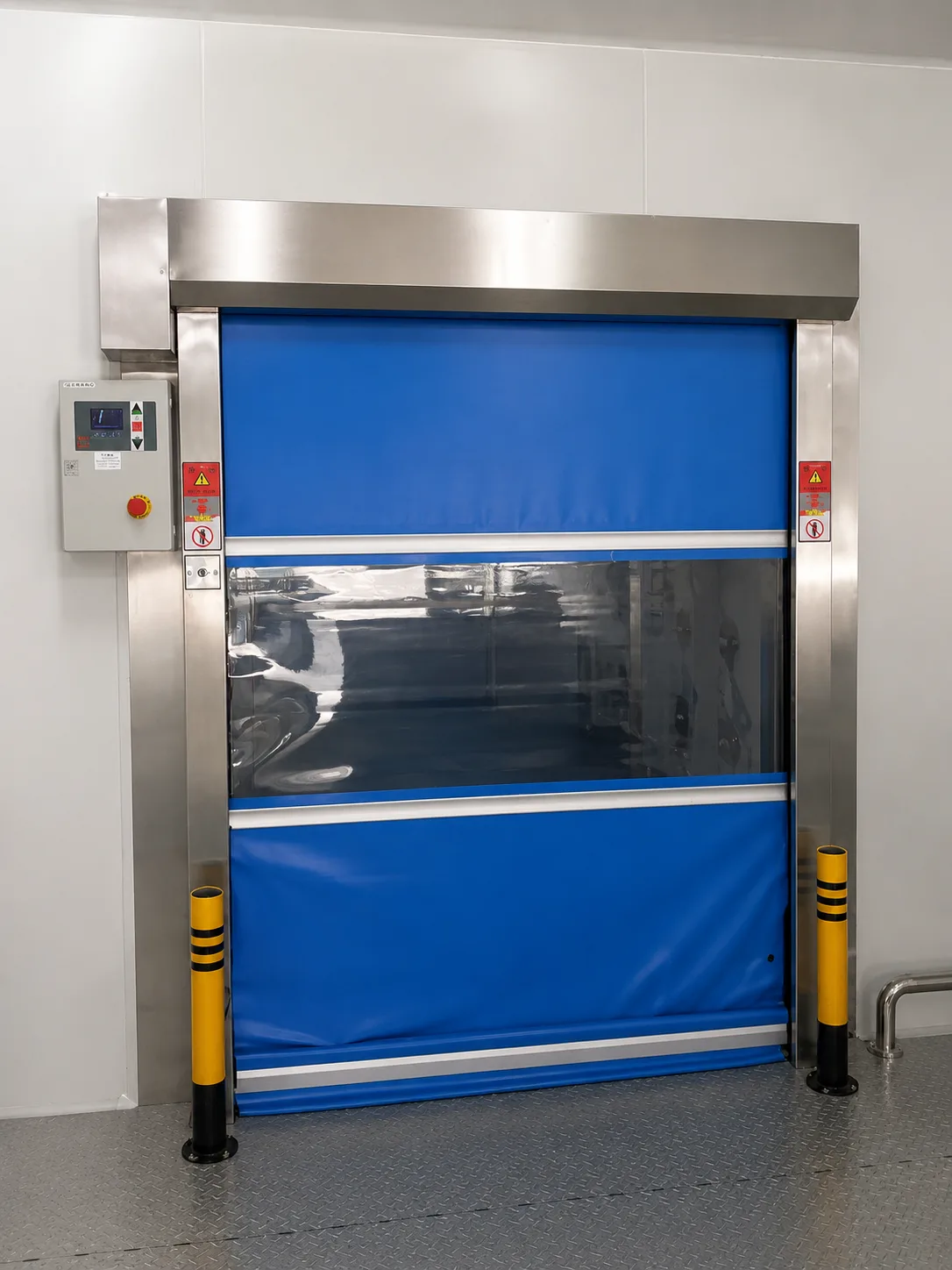
This pairing is detailed in high-speed vs ordinary roller shutters and the wind-resistant high-speed roller shutter advantages.
Cost & Compliance Trade-Off
Fire-rated shutters cost more — more material, certified hardware, and test paperwork. But the alternative is not “saving money”; it is “failing the fire certificate,” which can block occupancy or invalidate insurance. A delayed opening permit can cost more in one week of lost operation than the entire upgrade from standard to rated across a building. Specify fire-rated only where required, standard everywhere else, and you get compliance at the lowest total cost. Budget framing lives in what does a roller shutter usually cost? and where to buy fire-rated shutters wholesale.
Story: A logistics developer in Clark, Philippines, shaved the fire-rated shutters off two “non-critical” boundaries to hit a handover date. The fire inspector flagged both on the first walk-through; the occupancy certificate was withheld for six weeks while rated shutters were sourced and installed. The “saving” of a few thousand dollars became a six-figure delay. The contractor who pushed back on the spec, not the one who cut it, would have been the cheaper choice.
One more point buyers miss: a fire-rated shutter’s certificate travels with the model, not the order. If you later widen the opening or change the slat, the original rating may no longer apply — re-confirm the test report covers the exact size and class you install, as our fire-rated roller shutter size, material & installation guide explains.
Installation & Acceptance Still Apply
A fire-rated shutter is only as good as its install. The curtain must seat flush against a rated lintel, the wiring must link to the fire-alarm interface, and the unit must pass a drop test on acceptance. See steel fire shutter curtain & lintel quality, fire-rated roller shutter site wiring, and acceptance testing. Standard shutters follow the simpler electric roller shutter installation.
Decision Cheat-Sheet
- On a compartment boundary / escape route? → Fire-rated. Get the time (0.5h–3.0h) and class (E/I/S) from the plan.
- Not on a boundary, high traffic? → Standard high-speed.
- Not on a boundary, security only? → Standard aluminum or steel.
- Not on a boundary, retail frontage? → Standard crystal.
- Boundary AND busy? → Fire-rated on the line + standard high-speed behind it.
Need a second opinion on your fire plan? Get a fire-rated-vs-standard assessment from RHIDOOR → — we return a drawing and rating recommendation within 48 hours.
When in doubt, ask the fire consultant for the rated boundary drawing before you price a single door. Specifying from the drawing, not the quote, is what keeps the certificate clean and the budget honest — and it is the one habit that prevents both the over-spend of rating doors you did not need and the far costlier miss of leaving a real boundary unrated.
Conclusion
Fire-rated and standard roller shutters are not rivals — they answer different questions. Fire-rated only where the fire plan demands it, on compartment boundaries and escape routes, certified to a resistance time you can prove. Standard everywhere else, chosen for speed, visibility, security, or price. On busy boundaries, fit both. RHIDOOR builds the full range, ships from 1 piece in 15 days with 200+ RAL colors, and supports the install so the certificate means something.
Get your fire-rated-vs-standard specification → Contact RHIDOOR for a tailored quote.