An aluminum roller shutter does more than cover an opening. The slat profile, the finish, and the way it is fitted decide how it looks and how long it lasts. RHIDOOR has laid out the profile range and the install steps below so you can specify with confidence. Our aluminum alloy roller shutter profiles take almost any color or surface film — wood-grain emboss, sand texture, you name it — and that helps a storefront stand out without extra cladding.
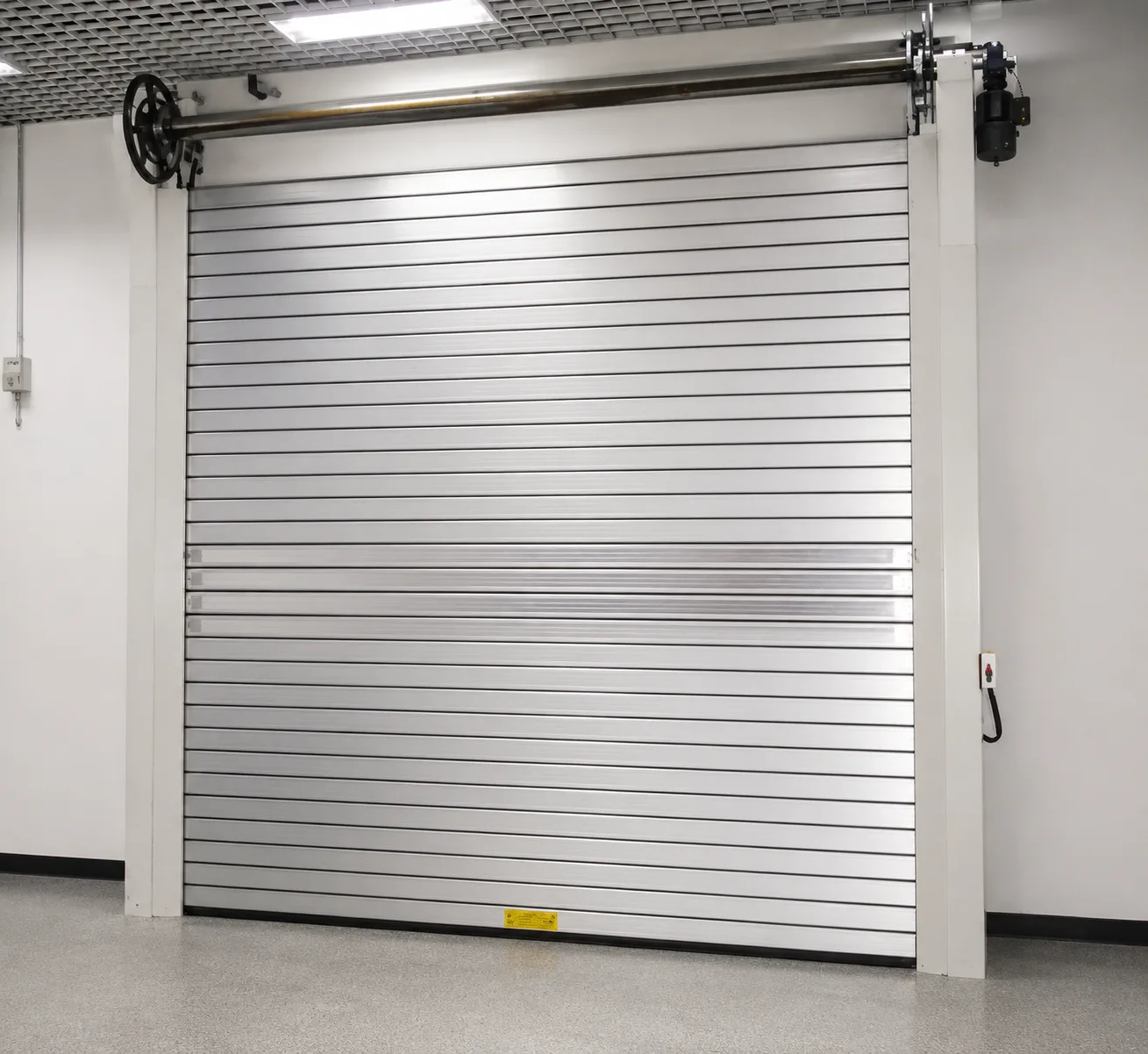
The curtain body blocks strong daylight and UV. That stops the greenhouse effect you get with clear glazing. The slats suit any climate and protect the indoor space year round. A closed curtain blocks sunlight completely and cuts transmitted heat by more than 95%.
Aluminum Alloy Roller Shutter Profiles
We build the curtain from extruded aluminum slats in these model widths: 77#, 65#, 55#, and 50#. We also offer perforated versions of the 77# and 50# slats when you need airflow with the door down. Match the width to your opening first — it drives everything else.
Two Common Profile Types
Two builds cover most jobs.
The 77# double-wall slat runs 77 mm wide and carries a noise-damping strip between slats, so travel stays quiet. A thickened, widened guide rail takes wind load on wide spans. We fit it on villa garages, shopfronts, and large factory or warehouse openings up to 8.5 m wide.
The 55# double-wall slat runs 55 mm wide and stays unperforated. A 20 × 2.3 mm vent slot at the hook lets in light and air, and the damping strip keeps it quiet. Keep the span at or under 4 m.
Aluminum Shutter Installation
Installation is on-site guidance, not just a product. Our technician walks your team through it. The steps below are what we follow on a typical job.
- Motor and drive. Hang the manual chain and bolt the motor to the mounting board. Link the chain to the wheel and to the motor base gear, then tighten every connection. Wire the remote box to the motor and check the travel direction with the hand control. If the door runs the wrong way, the remote receiver has a black button on its side — flip it to the other side.
- Shaft and curtain. Measure the main and sub boards to confirm size, then lay the shaft on the side plates. Mark a level line on the shaft and drill a 10 mm hole every 50 cm, keeping the row straight. Weld a 14 mm nut to the shaft, square to the hole, and make the weld solid. Line up the first slat’s center with the shaft hole and drill straight down with a 10 mm bit. You can also use self-tapping screws: thread the aluminum slats, cap both ends, and rivet as you go. After capping, loop a rope over the shaft and drill a hole in the curtain. Tie one end, have a helper hold the other, press Up to wind the curtain, and bolt it to the shaft level with washers. Pull it up tight.
- Rails and limits. Cut a V into one rail end and level the curtain. Set the upper and lower travel stops: the left pulley is the upper limit, the right is the lower.

Related Articles
- Fire Rated Roller Shutter Door: Size, Material, and Installation Steps
- Fire Rated Roller Shutter Quality and Where to Install
- Materials to Consider Before Buying a Roller Shutter
- Choosing the Right Material for Electric Roller Shutters
Ready to spec your aluminum roller shutter? Our team helps you match the right profile and walks your install crew on site. We build to order with a 15-day lead time and an MOQ of 1 pc. Reach us at +86 18938501256, on WhatsApp at wa.me/8618938501256, or by email at ruihua@rhidoor.com.
