The question “aluminum or steel?” sounds like a spec detail. It is actually the decision that decides your motor size, your installation labor, your rust risk, and your lifetime cost. Pick wrong and you either overpay for strength you do not need, or under-spec a door that sags, rusts, or strains its motor within a few years.
An aluminum roller shutter uses aluminum alloy slats — lighter, naturally corrosion-resistant, quieter, and available in many anodized or painted finishes. A steel roller shutter uses galvanized or stainless steel slats — stronger per dollar and harder to force open, but heavier and vulnerable to rust if its coating is damaged. Choose aluminum for lighter structures, coastal or humid sites, and quieter operation; choose steel for maximum security and the lowest upfront cost.
This comparison breaks the trade-off down by cost, durability, and where each belongs, with links to the material deep-dives.
Key takeaways
– Aluminum is lighter (easier motor/frame), corrosion-proof, and quieter — but costs more per kg.
– Steel is stronger per dollar and tougher against forced entry — but heavier and rusts if coating is scratched.
– The motor and lintel are sized off weight: a wide steel shutter needs a bigger barrel and reinforced structure.
– Coastal/humid sites favor aluminum or stainless; dry, high-security sites favor steel.
– Total cost of ownership, not sticker price, decides the winner — see the lifecycle math below.
How the Two Curtains Differ
Both curtains roll the same way and share motors and controls. The slat material is the whole story:
- Aluminum slats are extruded or roll-formed alloy, often with a foam core for insulation and quiet running. Density ~2.7 g/cm³.
- Steel slats are galvanized (or stainless) sheet, double-walled with insulation in better models. Density ~7.8 g/cm³ — roughly three times heavier for the same volume.
That 3× weight gap cascades into everything else. Our how to pick the right roller shutter material and electric roller shutter material comparison cover the full spectrum including stainless.
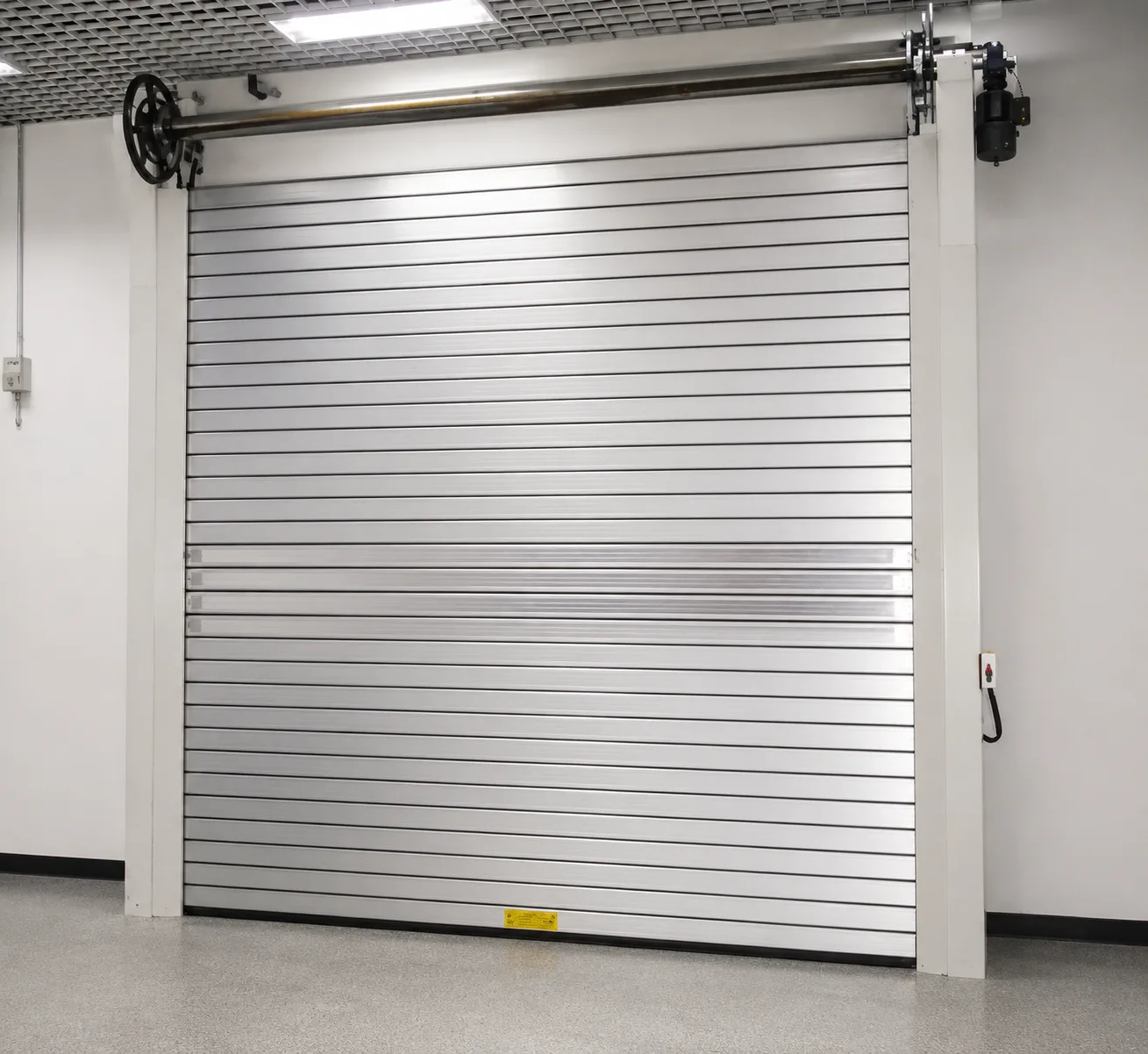
Side-by-Side Comparison
| Factor | Aluminum Roller Shutter | Steel Roller Shutter |
|---|---|---|
| Weight | Light (~1/3 of steel) | Heavy |
| Upfront cost | Higher per m² | Lower per m² |
| Corrosion resistance | Excellent (no rust) | Good if coated; rusts if scratched |
| Security vs force | Good | High (best for brute force) |
| Noise | Quieter | Louder (mitigated by insulation) |
| Motor / structure load | Smaller motor, lighter lintel | Bigger motor, reinforced lintel |
| Finish options | Many anodized/painted colors | Painted; fewer premium finishes |
| Best for | Coastal, humid, light frames, quiet sites | High-security, budget, dry sites |
Cost: Sticker vs Lifecycle
Steel wins the quote. Aluminum wins the long run on many sites:
- Upfront: steel is cheaper per square meter of curtain. See what does a roller shutter usually cost? for baselines.
- Structure & motor: a lighter aluminum curtain lets you use a smaller motor and a standard lintel — savings that narrow the gap.
- Maintenance: aluminum never rusts, so there is no repaint cycle. Steel needs chip-touch-up and, eventually, repainting in aggressive environments. Maintenance that extends roller shutter life shows how the two diverge over years.
- Replacement: a seized steel barrel from corrosion can mean a full swap; aluminum ages more gracefully.
Story: A beachfront café in Mombasa specified a galvanized steel shutter to save money. Within 18 months the salt air had spotted the slats and the bottom rail rusted through at the drain holes. The repaint cost more than the original saving, and the door still looked tired. On the second unit they paid the premium for aluminum — and three years later it looked showroom-new with nothing but a wipe-down.
Durability & Environment
- Humid, coastal, or wash-down sites (food, pharma, pools) → aluminum or 304 stainless. Steel will fight a losing rust battle.
- Dry, high-theft sites (warehouses, utility yards) → steel’s force resistance and low price win.
- Insulated needs → both offer foam-filled double-wall slats; aluminum just gets there lighter.
For the material decision behind electric shutters specifically, read which material is best for electric roller shutters and materials to consider before buying a roller shutter.
Finish, Color & Aesthetics
This is where aluminum pulls clearly ahead for front-of-house work. Aluminum takes an anodized finish that never peels and reads as premium, or a painted finish in 200+ RAL colors that matches a brand or a building. Steel is usually painted (fewer premium finishes), and any scratch on steel exposes bare metal that must be touched up to stop rust — whereas a scratch on anodized aluminum stays cosmetic. For a customer-facing shopfront, the finish often decides the sale before the spec does.
Insulation & Climate Control
Both materials offer foam-filled double-wall slats that cut heat transfer and outside noise. The difference is weight: an insulated aluminum curtain still beats an insulated steel one on motor size and lintel load. On a conditioned showroom or an office backing onto a loading yard, that insulation pays back in energy and comfort — and aluminum gets you there without overloading the structure. If you need the insulation and maximum security, a foam-filled steel curtain is the heavy-duty answer.
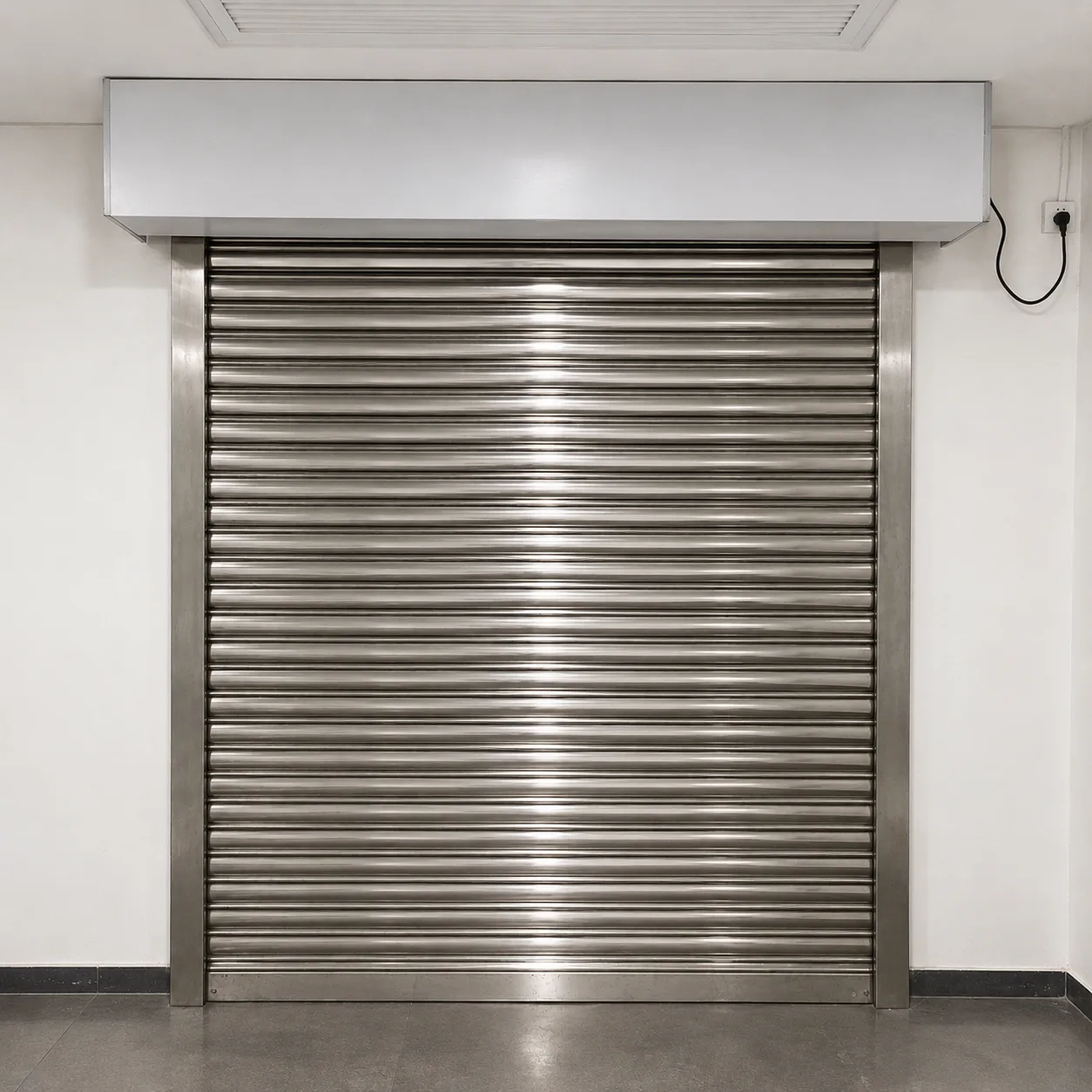
Use Cases
Aluminum fits: shopfronts on light frames, residential and garage applications, food/pharma sites, anywhere quiet running matters, and any opening near the sea.
Steel fits: service doors, warehouses, plant rooms, and high-security perimeters where brute-force resistance leads and weight is no problem.
Story: A cold-store operator in Addis Ababa first quoted steel throughout — cheapest per m², he reasoned. His engineer flagged the weight: a 4-metre steel shutter on a prefab panel wall would need a structural upgrade costing more than the material saving. They switched the customer-facing bays to aluminum (lighter frame, no upgrade) and kept steel only on the solid rear dock where weight was free. The building stood, the budget held, and the aluminum bays have needed nothing but washing in four years.
If you run a mixed site, spec by zone rather than by habit: aluminum where the structure is light or the air is wet, steel where the threat is force and the wall can carry it. The complete roller shutter size guide helps you confirm the span and load before you commit.
If your opening is large and steel-heavy, confirm the complete roller shutter size guide limits and reinforce the lintel accordingly — the same rule that governs fire-rated doors applies here.
Maintenance & Repair
- Aluminum: clean with mild detergent; lubricate guides annually; check the motor. Few corrosion issues. Broad guidance in electric roller shutter care & maintenance.
- Steel: touch up any coating chip immediately to stop rust; inspect the bottom rail drain holes; expect a repaint cycle in harsh air. When a spring or motor fails, quick repair for a broken roller shutter spring and cost to replace a roller shutter motor frame the fix.
One practical note that decides uptime: spares strategy. Aluminum’s lighter slats are cheaper to keep on a shelf and faster to swap; steel’s heavier barrel and motor are costlier to hold as backup but fail less often when coated and maintained. Either way, agree a spares list with your supplier at order time so a breakdown is a same-day fix, not a three-week international shipment. RHIDOOR’s 1-piece MOQ makes it easy to land a spare leaf or a full replacement door without a container.
Decision Framework
- Is the site humid, coastal, or washed down? → aluminum (or stainless).
- Is forced entry the top risk and the structure can carry weight? → steel.
- Is the frame light or the opening wide? → aluminum (smaller motor/lintel).
- Tightest upfront budget, dry site? → steel.
Want a sized recommendation for your opening and climate? Get an aluminum-vs-steel quote from RHIDOOR → — 1-piece MOQ, 15-day lead, 200+ RAL colors.
If you are speccing a whole site, decide by zone and order together. Mixing aluminum on light, wet, or customer-facing bays with steel on solid, high-risk ones — then batching the order — lets RHIDOOR match the motor brand, the color, and the spare-parts list across every door. You get the right material per opening without managing two suppliers, two lead times, and two warranty contacts.
Conclusion
Aluminum and steel roller shutters are not “good and better” — they are light/clean/quiet versus strong/cheap/tough. Aluminum pays back on coastal, humid, light-frame, and quiet sites; steel wins on high-security, dry, budget-led openings. Size the motor and lintel to the weight, plan the maintenance to the environment, and the door will outlast the building’s next refit. RHIDOOR supplies both, finished in your color, with fast low-volume delivery.
Specify the right material for your site → Contact RHIDOOR for a tailored quote.