Here is the night-shift problem every mall retailer knows: you want the storefront locked tight after close, but you also want the window lit and visible so the products still sell to passers-by. A traditional steel or aluminum shutter solves the first need and kills the second. A crystal (transparent) roller shutter does both — and that single difference is why the two types are not really competitors, but answers to different briefs.
A crystal (transparent) roller shutter uses clear polycarbonate or acrylic slats set in an aluminum frame, giving you the physical security of a roller shutter with see-through visibility. A traditional roller shutter uses solid steel or aluminum slats that block the view entirely but cost less and resist brute force better. Choose crystal when visibility and presentation matter; choose traditional when pure security and price lead.
This comparison gives you the head-to-head, a decision table, and links to the deep-dives so you can specify with confidence.
Key takeaways
– Crystal shutters = security with visibility; best for malls, flagships, and any lit storefront.
– Traditional shutters = maximum brute-force resistance and lowest cost; best for back-of-house, warehouses, and budget sites.
– Crystal slats scratch more easily and cost more per m²; traditional slats are heavier and block daylight.
– Both run on the same motors and controls — the difference is the curtain, not the automation.
– Match the type to the face of the building: public frontage → crystal; service yard → traditional.
How Each Door Works
Both are roll-formed curtains on a barrel, driven by the same tubular or industrial motors. The only structural difference is the slat:
- Traditional: solid steel or aluminum slats, often insulated or perforated. Opaque, rigid, and proven against prying and impact.
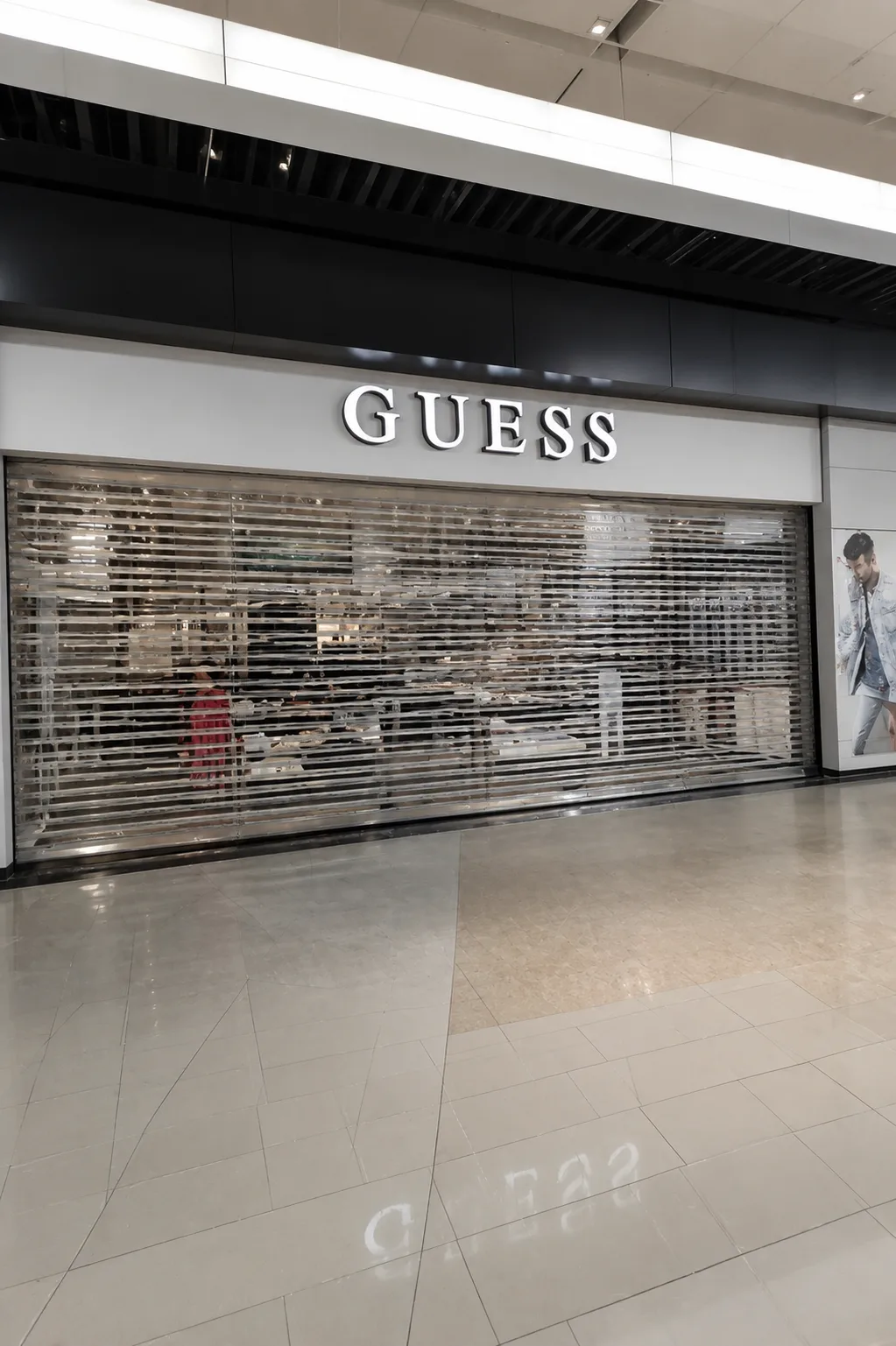
- Crystal: a row of transparent slats (polycarbonate/acrylic) held in aluminum carriers. Lets 80–90% of light through while still presenting a continuous barrier.
Because the mechanics are shared, you are not locked into a different control system — four control methods for high-speed roller shutters and pairing your roller shutter remote apply to both.
Side-by-Side Comparison
| Factor | Crystal (Transparent) Shutter | Traditional Roller Shutter |
|---|---|---|
| Visibility | High — merchandise/staff visible day and night | None — fully blocks the opening |
| Security level | Good against casual theft; weaker vs heavy impact | High — resists prying and impact |
| Daylight & display | Excellent; doubles as lit window | None |
| Material cost | Higher per m² | Lower per m² |
| Weight / motor load | Light (aluminum-framed) | Heavier, especially steel |
| Scratch / wear | Slats scratch; needs care | Robust; paint can chip/rust |
| Best location | Mall kiosks, flagships, pharmacies, showrooms | Service doors, warehouses, back lanes |
| Typical lead | Standard; custom slat colors available | Standard; wide color range |
Where Crystal Wins
Crystal shutters earn their keep anywhere the opening is also a billboard:
- Shopping malls & kiosks — the shutter comes down, the window stays a window. See our crystal shutter buying guide for shops and malls.
- Pharmacies & convenience stores — security without losing the lit-frontage signal that drives impulse visits.
- Showrooms & car dealers — keep the display lit and the stock secured overnight.
- Premium retail — the standout advantages of crystal roller shutter doors include a cleaner, higher-end look than a solid grille.
Story: A cosmetics retailer in a Nairobi mall ran a solid aluminum shutter for years. Every evening the frontage went dark and she lost the after-hours browsers who walked the mall after dinner. She switched to a crystal shutter and kept the window lit with interior spots. Foot traffic past the store rose, and — counter to her worry — theft attempts dropped, because the lit, visible interior deterred the opportunists a dark shutter had hidden from.
Where Traditional Wins
Traditional shutters are the right call when you do not need to be seen:
- Service yards & loading bays — no display value, maximum toughness.
- Warehouses & plant rooms — security first, visibility irrelevant.
- Budget-driven rollouts — lower per-m² cost across many openings.
- High burglary-risk sites — a thicker steel curtain resists tools a polycarbonate slat will not.
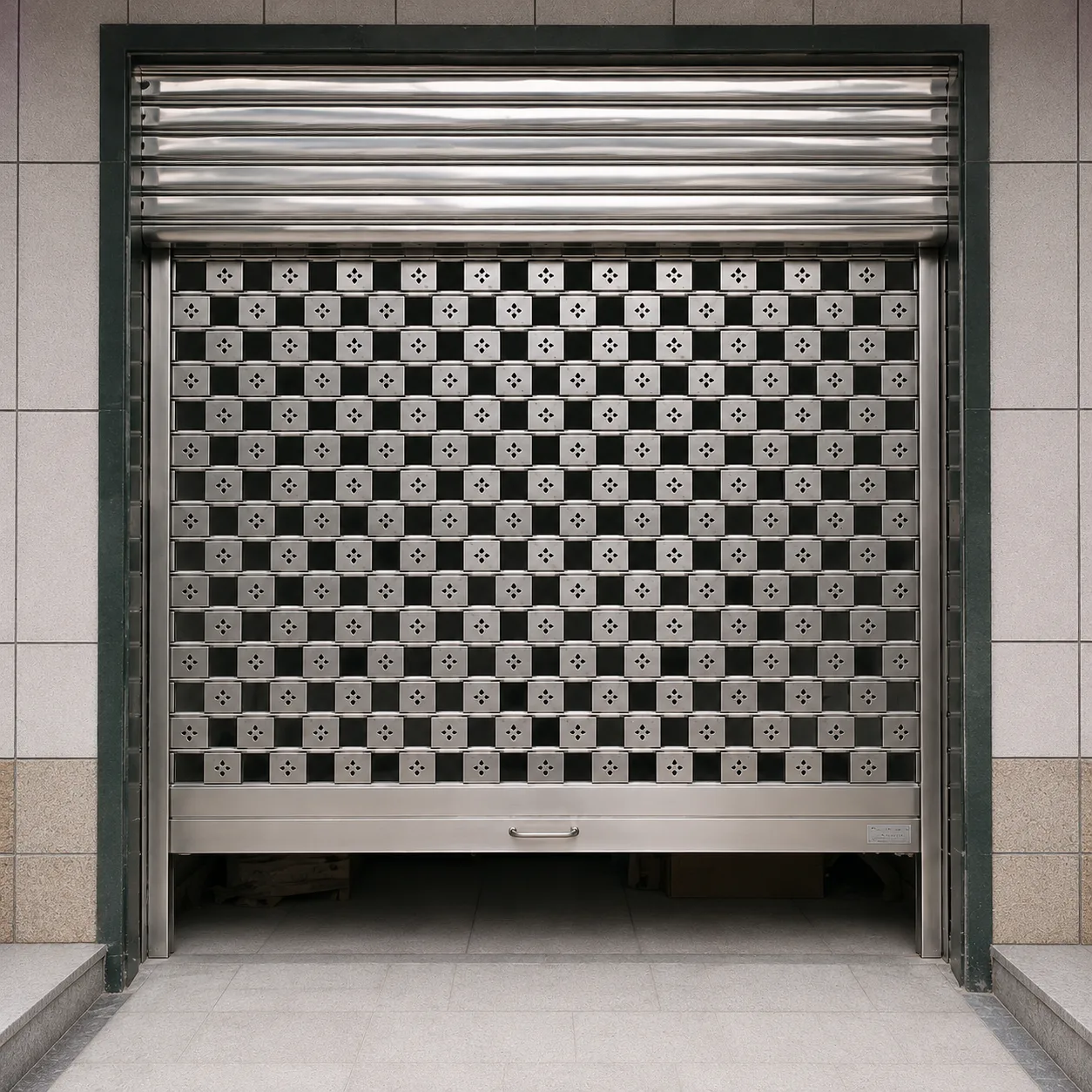
If you want security and some airflow or a hint of visibility on a traditional unit, a perforated stainless rolling door or a stainless curved-slat shutter is the middle ground. Our how to choose a quality crystal roller shutter explains the build quality markers to check on either type.
Cost & Lifecycle
Crystal costs more up front — the transparent slats and aluminum frame are pricier than plain steel. But the “lost display” cost of a traditional shutter is real for a retail frontage, and crystal avoids repainting (no rust). For service areas with no display value, traditional wins on pure price.
Two references frame the money: what does a roller shutter usually cost? for the baseline, and stainless steel shutter prices — is 304 electric worth it? for the premium-material branch. Either way, electric roller shutter care & maintenance keeps the lifetime cost down.
Maintenance Differences
- Crystal: clean slats with a soft cloth and non-abrasive cleaner; avoid solvent wipes that cloud the plastic. If it jams, crystal electric roller shutter troubleshooting covers the usual fixes.
- Traditional: inspect the coating for chips (touch up steel to stop rust), lubricate the guides, and test the motor. The broader playbook is maintenance that extends roller shutter life.
Installation & Structural Notes
Both hang on the same barrel-and-guide hardware, but the curtain changes the install detail. A crystal shutter’s aluminum carriers need a true, level head box or the transparent slats rack and bind; a traditional steel shutter’s weight demands a reinforced lintel and a correctly sized motor from the start. Headroom and side room follow the same rules as any roller — see the complete roller shutter size guide. One practical tip: fit the crystal shutter with an internal light sensor or a small always-on spotlight so the lit-window effect survives a power cut.
Compliance & Insurance
Insurers and mall management often treat the two differently. A solid steel shutter is assumed secure; a crystal shutter may need a documented alarm or grade of polycarbonate to satisfy a risk assessment. Check the lease or the insurer’s schedule before you specify — a crystal frontage that fails the security clause costs more to retrofit than specifying it correctly the first time. Our crystal shutter buying guide for shops and malls lists the specs mall operators in export markets typically ask for.
Story: A pharmacy chain in Kampala wanted crystal shutters across 12 branches for the lit-window look. Their insurer initially refused cover, citing “transparent = easy entry.” RHIDOOR specified 5 mm polycarbonate with a certified alarm contact and supplied the test data; the insurer signed off, and the chain kept the displays. The fix was paperwork and the right slat spec, not a different door.
A Note on Hybrid Frontages
Some sites do not want an either/or choice. A common retail pattern is a crystal shutter for the glazed display span plus a traditional steel or perforated shutter over the solid side panels — one opening, two jobs, one motor controller. Mall kiosks and corner stores use this to keep the hero window lit while still presenting a hard barrier where there is nothing to show. If your frontage mixes glass and solid, spec the two curtain types to the same barrel width so they present as one door.
Decision Framework
Ask three questions:
- Is the opening public-facing and meant to stay visible? Yes → crystal. No → traditional.
- Is brute-force burglary the main threat? Yes, and no display need → traditional steel.
- What is the budget per opening? Tight, no display → traditional; frontage value exists → crystal pays back.
Not sure which frontage you have? Get a crystal-vs-traditional recommendation for your site → RHIDOOR ships both from 1 piece with a 15-day lead and 200+ RAL colors.
If you are fitting a whole mall row or a retail park, spec the two types together rather than store by store. Ordering crystal and traditional shutters in one batch lets RHIDOOR match the barrel widths, the motor brand, and the color across every frontage, so the row reads as one system and your maintenance team carries one spare-parts list. It also shortens the lead versus two separate orders and gives you a single point of contact for acceptance and warranty.
Conclusion
Crystal and traditional roller shutters are not better-or-worse — they serve different faces of the same building. Put crystal on the storefronts you want lit and visible; put traditional steel or aluminum on the service doors where toughness and price lead. Both run on the same proven motors, both secure the opening, and both are available from RHIDOOR in your color with fast, low-MOQ delivery.
Specify the right shutter for each opening → Contact RHIDOOR for a tailored quote.