Direct answer: Higher foam density mainly improves panel strength, not R-value. For polyurethane (PU) insulated shutter slats, R-value is driven by foam thickness and thermal conductivity (λ ≈ 0.020–0.023 W/m·K), not by density — a 40 kg/m³ core at 20 mm delivers roughly R-5.4, and each extra 10 mm of thickness adds about R-2.7 at typical PU conductivity.
Why density does not equal insulation
Buyers often assume a denser foam core insulates better. In practice, density in PU foam controls:
- Compressive strength and dent resistance of the slat panel — relevant for impact and wind load.
- Skin adhesion and slat rigidity during rolling/unrolling.
- Only a marginal effect on conductivity: within the typical shutter range of 35–60 kg/m³, PU conductivity stays close to 0.020–0.023 W/m·K [T]. Very low density (<30 kg/m³) degrades conductivity because cell walls thin out; very high density adds solid polymer, which conducts more heat than trapped gas.
So for thermal performance, specify thickness and conductivity; for mechanical performance, specify density. They are separate parameters.
Density / thickness / R-value conversion table
R-value is calculated as thickness ÷ conductivity. Assumptions used below [E]: rigid PU foam, λ = 0.022 W/m·K (mid-point of the typical 0.020–0.023 range), steady-state, no thermal bridging through steel skins or interlocks. Real installed values are lower because of metal bridges at slat joints — treat these as core-only figures.
| Foam density [T] | Slat foam thickness | Core R-value (ft²·°F·h/BTU) [E] | Typical use |
|---|---|---|---|
| 35–40 kg/m³ | 15 mm | R-3.5 to R-4.0 | Light commercial, mild climates |
| 40–45 kg/m³ | 20 mm | R-5.4 | Standard insulated industrial slat (most common) |
| 40–50 kg/m³ | 25 mm | R-6.8 | Cold storage anterooms, heated workshops |
| 45–55 kg/m³ | 30 mm | R-8.1 | Freezer/cold room entrances, harsh climates |
| 45–55 kg/m³ | 40 mm | R-10.8 | High-spec cold chain, pharmaceutical |
Formula [E]: R (ft²·°F·h/BTU) = thickness (m) ÷ λ (W/m·K) × 5.678. Example: 0.020 m ÷ 0.022 × 5.678 ≈ R-5.2 (rounding gives R-5.4 at λ = 0.021). Manufacturer test data required for project submittals.
Reference points from standards
- ASHRAE 90.1 sets minimum envelope requirements for opaque doors (including rollup doors) by climate zone; doors are typically assessed by U-factor, not R-value alone — U = 1/R [S].
- ASTM C518 / C177 are the standard laboratory methods used to measure thermal conductivity of foam cores [S].
- Installed door U-factors from manufacturers must include slat joints, guides and bottom bar — a whole-door U-factor test is the only defensible number for compliance [T].
Selection guidance by scenario
- Heated warehouse, temperate climate (ASHRAE zones 3–4): 20 mm foam at 40–45 kg/m³ (≈ R-5 core) is the industry-standard slat; focus budget on perimeter seals instead.
- Cold storage +2 °C to −25 °C: 30–40 mm foam (R-8 to R-11 core) with thermal-break bottom bar; condensation control at guides matters more than another 5 mm of foam.
- High wind + insulation combined (coastal or tall openings): raise density to 50–55 kg/m³ for slat stiffness, and get R-value from thickness — do not expect density alone to insulate.
- Extreme heat climates (Middle East, desert): R-value still applies in reverse (keeping heat out); specify reflective external finish to cut solar gain on the steel skin [T].
Frequently asked questions
Does higher PU foam density give a higher R-value?
No. Within the typical 35–60 kg/m³ range, PU conductivity stays around 0.020–0.023 W/m·K. Density controls slat strength and dent resistance; R-value comes from foam thickness and conductivity.
What R-value does a standard insulated roller shutter provide?
A common 20 mm PU-filled slat (40–45 kg/m³) gives roughly R-5 to R-5.5 for the foam core alone. Whole-door values are lower due to metal thermal bridging; request manufacturer test data.
How do I convert foam thickness to R-value?
Use R = thickness (m) ÷ λ (W/m·K) × 5.678. For PU at λ = 0.022 W/m·K, every 10 mm of foam adds approximately R-2.6 to R-2.9 to the core value.
Is R-value or U-factor used for energy code compliance?
U-factor. ASHRAE 90.1 and IECC specify maximum U-factors for opaque doors. U = 1/R for the same assembly, so ask suppliers for tested whole-door U-factors, not core R-values.
References & data provenance
| Data point | Level | Source |
|---|---|---|
| Rigid PU foam conductivity range 0.020–0.023 W/m·K and density range 35–60 kg/m³ | [T] | Industry nominal ranges across shutter manufacturers — https://www.dasma.com |
| Door U-factor requirements by climate zone; U = 1/R relationship | [S] | ASHRAE Standard 90.1 — https://www.ashrae.org |
| Standard methods for measuring foam thermal conductivity (ASTM C518 / C177) | [S] | ASTM International — https://www.astm.org |
| R-values in the conversion table (R = t/λ × 5.678) | [E] | Calculated: λ = 0.022 W/m·K assumed, core-only, no thermal bridging — manufacturer data required |
[S] = from the referenced published standard. [T] = industry typical range, not a precise tested value. [E] = calculated estimate with stated assumptions. Always obtain whole-door tested U-factors from the manufacturer for code submittals.
For product context, Explore rolling shutter door options.
Direct answer: A fusible link is a passive mechanical trigger that melts at a fixed temperature (typically 165 °F / 74 °C) and drops the shutter by gravity; an automatic smoke-release is an electromechanical operator wired to the fire alarm that closes the shutter on smoke detection — often within seconds, long before heat builds. The required release sequence depends on the listed assembly, fire strategy, adopted code, and authority having jurisdiction (AHJ).
Side-by-side comparison
| Parameter | Fusible link | Automatic smoke-release |
|---|---|---|
| Trigger mechanism | Soldered metal link melts at rated temperature | Fire alarm / smoke detector signal to release device or operator |
| Typical trigger point | 165 °F (74 °C) standard link; other temps available [S/T] | Smoke detection at incipient stage — seconds after alarm [T] |
| Response time | Minutes — needs real heat at the opening [T] | Seconds after detector activation [T] |
| Power dependency | None — fully passive, works in power failure | Needs alarm circuit power; battery/UPS backup typical [T] |
| Closure mode | Gravity drop (governed speed on listed operators) [S] | Motor-driven or governed gravity release [S] |
| False-alarm behaviour | Cannot false-trigger | Can drop on false alarm — needs reset procedure |
| Reset after activation | Replace the melted link; manual re-hoist | Electrical reset at operator/panel; no parts consumed |
| Typical compliance role | May be part of the listed assembly; verify the specific listing | Primary release where early closure / smoke control is specified [S] |
| Typical applications | Small counter shutters, legacy installs, power-independent backup | Exit enclosures, atriums, smoke barriers, egress corridors, BMS-integrated buildings |
Data level: release-device requirements and inspection rules are [S] (NFPA 80; UL-listed operators); response times and application guidance are [T] industry typical.
How each system actually works
Fusible link: a calibrated alloy link holds a tensioned chain or cable in the operator’s release mechanism. At its rated temperature (commonly 165 °F / 74 °C, with 212 °F / 100 °C and 286 °F / 141 °C variants) the solder melts, the chain runs free, and the curtain descends by gravity, braked by a governor to a code-limited descent speed (typically max ~24 in/s / 0.6 m/s) [S/T]. It is simple, power-free and cannot be spoofed — but it only reacts when fire is already at the door.
Automatic smoke-release: the shutter operator is wired to the building fire alarm (addressable relay or dedicated releasing circuit). On a smoke-detector alarm, the operator either drives the curtain down under power or electrically disengages a brake for governed gravity descent. Because smoke rises and spreads far ahead of flame, closure typically happens minutes earlier than any fusible link could respond [T]. Some listed operators combine alarm-activated release and a fusible link. Check the exact listing before assuming both are required or compatible.
Which one does your code scenario require?
- Smoke barrier / atrium separation: smoke-activated release is normally specified — the barrier’s job is stopping smoke migration before heat arrives [S].
- Means of egress (corridors, exit access): alarm-activated closure with delayed or partial-drop logic is common so occupants are not trapped; confirm sequence with the AHJ [S].
- Property-protection-only openings (e.g., kitchen counters): a fusible link alone is often acceptable, but adding alarm release is cheap insurance.
- NFPA 80 inspection: both release types must be drop-tested and reset annually; fusible links must not be painted or coated, and any painted link must be replaced [S].
Resetting after activation (smoke-release operator)
- Confirm the fire alarm panel shows the zone restored and the alarm condition is cleared.
- Isolate motor power at the local disconnect before touching the operator.
- At the operator or release panel, press/latch the mechanical or electrical reset per the manufacturer’s label.
- Restore power and use the “open” control to re-hoist the curtain fully; verify limit switches engage.
- Test one full close–open cycle, then return the release circuit to normal and log the event.
For a fusible-link drop: replace the link with an identical rated-temperature link (never a higher temperature, never painted), re-tension the chain, and re-hoist.
Frequently asked questions
Which drops faster in a real fire: fusible link or smoke-release?
Smoke-release, by far. It triggers on smoke detection — typically seconds after alarm — while a fusible link needs ~165 °F (74 °C) heat at the opening, which can take minutes [T]. Both then descend at governed speed.
Is a fusible link still required if I have alarm-activated release?
It depends on the listed assembly and approved release design. Do not remove a link supplied as part of a listed assembly; ask the manufacturer and AHJ before changing the release system.
What temperature do fusible links melt at?
The standard rating is 165 °F (74 °C); 212 °F (100 °C) and 286 °F (141 °C) variants exist for high-ambient areas like kitchens or boiler rooms [T]. Match the link rating to the original listing.
Can a painted fusible link still work?
Not reliably — paint insulates the solder and delays or prevents melting. NFPA 80 requires painted or coated links to be replaced during inspection [S].
References & data provenance
| Data point | Level | Source |
|---|---|---|
| NFPA 80 release-device, drop-test and painted-link rules | [S] | NFPA — https://www.nfpa.org |
| UL-listed fire shutter operators with dual release | [S] | UL — https://www.ul.com |
| Standard fusible link temperature ratings (165/212/286 °F) | [T] | Industry typical — https://www.cornelliron.com / https://www.cooksondoor.com |
| Response-time difference (seconds vs minutes) | [T] | Industry typical; site-specific timing requires commissioning test data |
| Governed descent speed limits | [T] | Manufacturer operator data — https://www.cornelliron.com — manufacturer data required |
[S] = from the referenced published standard. [T] = industry typical; confirm against the specific operator’s UL listing and NFPA 80 edition adopted by your AHJ.
For product context, Read the fire-rated roller shutter guide.
Direct answer: UL 10B and UL 10C are both fire-test standards for door assemblies, but they use different furnace-pressure conditions. The applicable standard depends on the product category, its listing, the opening, and the adopted code. UL Solutions’ current application guide identifies rolling steel fire doors under category GSVV with UL 10B; its positive-pressure UL 10C category is for certain swinging fire doors. Do not assume every fire-rated shutter needs UL 10C.
The distinction that matters
| Check | UL 10B | UL 10C |
|---|---|---|
| Standard | Fire Tests of Door Assemblies | Positive Pressure Fire Tests of Door Assemblies |
| Pressure approach | Conventional fire-door furnace-pressure regime | Positive pressure above the prescribed neutral-pressure plane |
| Test purpose | Evaluate a complete fire-door assembly | Evaluate a complete assembly under the specified positive-pressure conditions |
| How to use the result | Match the listing and rating to the exact opening | Use where the adopted code and certified product category call for it |
Both are assembly tests, not a certification of an isolated slat, motor, or curtain material. Their temperature exposure and hose-stream procedures have similarities, but a result under one standard is not a blanket approval under the other.
Why a rolling shutter is a special case
The term “fire door” covers several constructions. UL’s fire-door application guide lists Rolling Steel Fire Doors (GSVV): UL 10B and separately lists Swinging-type Fire Doors, Positive-pressure Tested (GSZN): UL 10C. That classification is a practical reason to check the actual listing before copying a specification from a swinging-door project into a rolling-shutter project.
A buyer should request the listing or certification record for the complete proposed assembly, including its size range, guides, bottom bar, operator, release arrangement, and rating. A laboratory report for a different size or product configuration does not establish that the offered unit is covered. The wall or barrier rating alone also does not determine the opening-protective rating; the adopted building code’s opening table and the authority having jurisdiction (AHJ) control that decision.
Positive pressure is not “across the entire specimen”
UL 10C specifies a neutral-pressure plane and positive furnace pressure above it. Describing the whole specimen as being under positive pressure is inaccurate. Pressure at different heights and the prescribed measurement location matter when interpreting a test, so project documents should name the test standard and the certified assembly instead of using “positive-pressure tested” as a generic marketing term.
A four-step specification check
- Identify the rated wall, opening function, and adopted code edition. Ask the design professional or AHJ for the required opening-protective rating and any smoke or egress condition.
- Identify the shutter type. A rolling steel fire door, service-counter shutter, fire curtain, and swinging fire door may sit in different certification categories.
- Ask the supplier for a current certification or listing covering the exact product family, rating, clear opening size, operator, and installation details. Confirm which fire-test standard appears in that record.
- Specify installation, release, inspection, and maintenance to the listing and the locally adopted edition of NFPA 80. Do not substitute an EN/CE declaration for a North American listing without the AHJ’s acceptance.
For product options, see RHIDOOR’s rolling shutter doors and fire and security doors. Product pages describe available families; request model-specific certification before specifying a fire-rated unit.
Frequently asked questions
Does UL 10C replace UL 10B for every fire shutter?
No. UL’s application guide identifies rolling steel fire doors under UL 10B. Some code applications require positive-pressure-tested swinging fire doors. Verify the product category and adopted code for the specific opening.
Is NFPA 252 withdrawn?
No. NFPA lists a 2022 edition of NFPA 252, Standard Methods of Fire Tests of Door Assemblies. UL also lists NFPA 252 among the test standards applicable to fire doors and shutters.
Can a UL 10C label on a component certify the whole shutter?
No. Ask for the certification covering the complete assembly in its installed configuration. Components must match the assembly listing and installation instructions.
Does an EN 1634-1 result count as a UL listing?
Not automatically. The test and certification routes differ. The project’s AHJ decides whether a proposed alternative is acceptable under the adopted code.
References
- UL Solutions: Fire-rated doors and opening protectives application guide — product categories GSVV and GSZN.
- UL Solutions: Fire-resistance rating and opening protectives — UL 10B, UL 10C, and NFPA 252.
- NFPA LiNK: Available publications — NFPA 252 edition listing.
Confirm the current listing and local code before procurement or installation.
Roller shutters sell well on the market. Earlier posts covered different types, styles, and repair. As the tech updates, more types and styles appear, including some that look good and work well, and quite a few homes now use them too. Today let’s look at the various sizes.

High-speed roller shutter sizes:
Makers build high-speed shutters up to W10 x H16 m, opening and closing at 0.6 to 2.0 m/s. Panel thickness: 0.3, 0.35, 0.4, 0.45 mm. Whole-panel thickness: 12 to 20 mm. There is no standard; each company sets its own.
Color steel roller shutter sizes:
Panel thickness options: 0.325, 0.4, 0.5, 0.6, 0.8, 1.0 mm. Rails: 80, 90, 105 mm, etc. Rail spec: 5.5 to 5.8 cm, or 9 cm. Aluminum spec: 0.6 to 1.2; rail 8 cm. Slat spec: type 77 is usually 77 mm wide per slat; type 99 is 99 mm.
Garage roller shutter sizes:
Set by the garage’s height and width. Garage shutters are almost unlimited: max build height 10 to 15 m, max width 4 to 12 m. Common sizes: the shaft is usually an 80 mm tube; end brackets vary by door size; decide on a cover by use. A small single garage (under 3 m wide, under 2.5 m high) uses type 55 or 77 slats; a large double garage uses type 77 slats.
Electric roller shutter sizes, several specs:
1. 3.5 m long x 4.3 m wide. By opening type, roller shutters split into manual and electric. Manual ones use the spring on the center shaft for balance; electric ones use a dedicated motor to turn the shaft and stop at set limits.
2. 5.2 m long x 4.3 m wide. By slat material: inorganic fabric, grid, aluminum alloy, crystal, stainless steel, and reinforced wind-resistant.
3. 4.5 m long x 4.8 m wide. By install: in-wall or side-wall (inside or outside the opening). By opening: top-roll or side-roll.
Fire-rated roller shutter sizes:
Common ones are about 2.5 x 3 m. The smallest on the market is 1.9 x 0.9 m, which is also the standard. The most common are 2 x 0.9 m, and the smallest is 1.9 x 0.9 m. That is the floor. More sizes are designed to the actual case. There is no fixed rule for the largest or smallest fire shutter size, nor for width.
On sizes, customers need not worry much. A proper, professional roller shutter maker sends an engineer to measure the opening and build the shutter to fit.
(Content generated by AI, for reference only)


Related Articles
- Fire-Rated Roller Shutter Door: Size, Material, and Installation Steps
- Fire-Rated Roller Shutter Acceptance and Testing Standards
Related Articles
- complete industrial roller shutter guide
- electric roller shutter material comparison
- pick the right roller shutter material
- how much a roller shutter usually costs
- fire-rated roller shutter size, material and installation
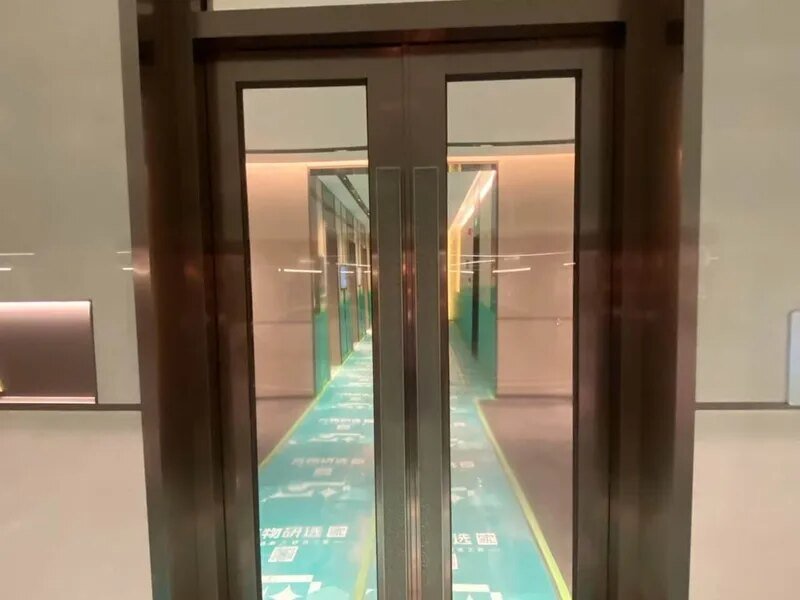
A fire-rated roller shutter is a specially engineered door designed for large openings in commercial and industrial buildings where fire, heat, and flame must be contained. It is built and installed to meet defined technical standards, and it is a standard safety fixture in modern high-rise buildings. Beyond simply covering an opening, it blocks fire and smoke, slows the spread of flames, and keeps evacuation routes clear. For a full breakdown of ratings and model selection, read our complete guide to ratings and selection.
How It Differs from a Standard Shutter
The basic frame is a steel shutter, but the drive system is reworked and fire-rated electrical components are added to deliver the safety function. A rated motor, run through a fire control box and a speed-reduction unit, drives the shaft that raises and lowers the curtain. If the power fails, a manual handle on the motor allows hand operation.
An electric model uses a coupling instead of a sprocket drive, and the guide rails are fitted with copper or nylon friction strips. The controls must raise, lower, and stop the door, with manual buttons on both sides. After the curtain drops and closes during a fire, it must be able to lift again and then return automatically to the closed position.
Fire Ratings and Standards
The curtain material, the surface dimensions, and the fire rating are all matched to the project and follow the construction budget together with the acceptance standards for the installation. The rating defines how long the door can hold back fire before it loses integrity, so it is selected early in the specification process.
Where It’s Required
These doors act as a firewall in the form of a horizontal fire compartment. They are installed where a conventional firewall is difficult to fit, such as open elevator halls, escalators, and the wide floors of department stores. The electric version is especially suited to factories and warehouses that use or store flammable gas or volatile chemicals, where the fire or explosion risk is high.
Key Components
An electric model is made up of 13 parts: curtain plate, seat plate, guide rail, bracket, shaft, box, control box, door machine, limiter, lintel, manual quick-release, button switch, and safety device.
Across workshops, retail units, and garages, these shutters are increasingly common because they offer more than a manual door. They look neater, remove the need to unlock and push by hand, and most importantly protect both life and property through their passive fire function. Explore our range of fire and security doors to compare options.

Further Reading
- Fire-Rated Roller Shutter Quality and Where to Install
- How Many Types of Fire-Rated Roller Shutters Are There, and Which Is Most Common?
- New Technical Specification Requirements for Fire-Rated Roller Shutters (Compiled with Care)
- Quality Requirements for Steel Fire-Rated Shutter Curtain Plates and Lintels
Related Articles
- complete fire rated roller shutter guide
- fire-rated roller shutter parameter classification
- types of fire-rated roller shutters
- fire-rated roller shutter parameters and applications
- industrial roller shutter types and advantages
- Fire-rated or standard? How to decide
The fire-rated roller shutter is a common type used among fire doors. It has evolved from single-leaf to double composite shutters and twin-track twin-curtain inorganic fabric shutters. To meet stricter fire demands, manufacturers keep researching and testing. Early steel fire shutters were single-plate: the curtain was made of 0.5 to 1.5 mm thin steel strips cut and rolled into linked slats. The single-plate steel shutter has a simple structure, high strength, wind resistance, theft protection, good formability, and is easy to process, install, and use. But its fire resistance and heat insulation are weak.

After steady research by manufacturers, the composite steel fire shutter is now the most used type globally. Compared with the single-plate version, its improved structure keeps the old advantages and raises heat insulation noticeably. In curtain terms, the composite steel fire shutter is built from composite sandwich slats: two thin steel strips with an inorganic fiber insulation layer between them. The inorganic fibers makers use are mainly rock wool, mineral wool, glass wool, or aluminum silicate fiber. Because inorganic fiber has low thermal conductivity, the composite steel shutter insulates far better than the single-plate type.
The composite steel fire shutter is made by pressing the main and auxiliary plates in one pass. The surface is smooth, weld-free, and strong. RHidoor’s custom steel fire shutters are filled with fire-retardant insulation, which cuts heat radiation on the unexposed side. They hold fire for a long time, perform well, and can drop the water-curtain protection system, meeting the compartment needs of all class-1 fire zones. The vertical-lift steel fire shutter is fitted with an electric open-close unit and can run in automatic and linked modes with the fire control center.
A fire-rated roller shutter must keep high fire strength and a long fire duration at the scene. So its build is demanding: the whole system must survive high heat for a set time. How long it holds fire is the main pass-or-fail measure. Large buildings, per fire law, have a central fire control system. When a fire starts, the smoke sensor on the ceiling picks up smoke first and alarms the central system. The system identifies the zone and powers the fire shutters there, which descend at a set speed. When a shutter reaches about 1.5 meters above the floor, it stops to let people evacuate. After holding for a set time, it resumes descending until closed.
If a shutter’s fire strength is not enough during an incident, it cannot hold the fire compartment for the expected time. For the people inside, that is disastrous. So the fire duration that proves fire strength is the key check in quality testing.
So where do you need fire-rated roller shutters, and what do they do?
Common places include underground garages, hotel atriums, malls, and industrial buildings where gas, dust, or other explosion risks may appear during production, processing, handling, or storage.
Related Articles
- How Many Types of Fire-Rated Roller Shutters Are There, and Which Is Most Common?
- Material Knowledge and Function to Know Before Buying a Fire-Rated Roller Shutter
- Fire-Rated Roller Shutter Door: Size, Material, and Installation Steps
- What Is a Fire-Rated Roller Shutter?
Related Articles
- complete fire-rated roller shutter guide
- fire-rated roller shutter size, material and installation
- which fire-rated roller shutter is worth buying
- steel fire-rated shutter curtain and lintel quality
- aluminum alloy roller shutter profiles
- Fire-rated vs standard: quality and install
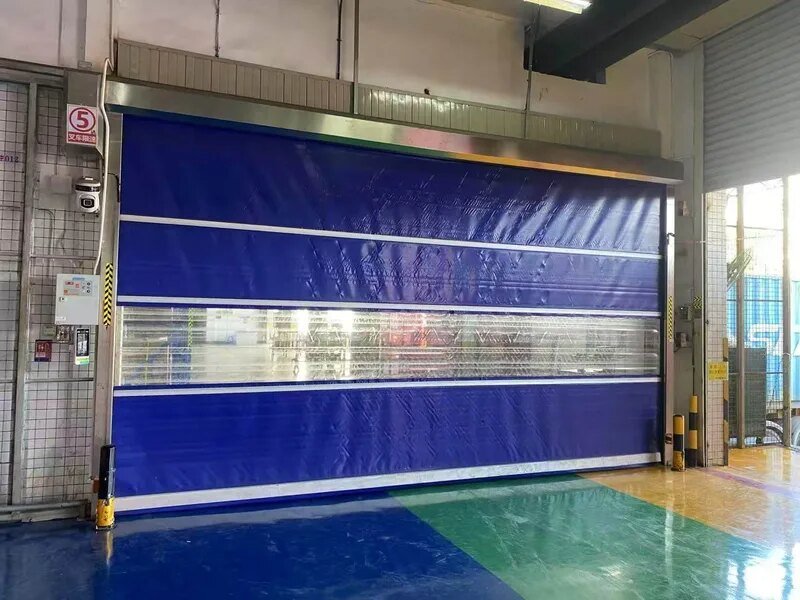
The design of a fast automatic roller shutter is stronger against wind pressure than ordinary high-speed models. It has more horizontal wind bars in the curtain, and the higher density lets the door withstand winds of force 9 to 10, taking up to 25 kg per square meter. So when buying an automatic high-speed shutter, look to RHidoor. The wind-resistant design solves the problem of exterior plant doors that fail to close under high wind pressure. It cuts the amount of sand and dust blown into the plant, speeds up logistics, and gives you fast flow with free opening and closing.

Advantages of the wind-resistant automatic high-speed shutter:
Strong sealing, no dust buildup, high stability, easy to clean. It meets GMP requirements for clean environments (class 1000 to 100000). It suits modern industrial plants used in medicine, food, electronics, chemicals, tobacco, printing, textiles, supermarkets, precision machinery, logistics storage, and clean industrial zones. It insulates, blocks dust, cuts noise, and seals out odors. It saves energy, opens and closes automatically at high speed: 0.6 to 1.5 meters per second (with a frequency converter the speed is adjustable), and runs over 1500 cycles a day without fault.
Safety devices on the automatic wind-resistant high-speed shutter:
1. Safety light curtain — About 30 cm above the floor, infrared safety beams are installed. When the door is closing and a person or vehicle crosses the beam, the door stops and reverses to stay safe.
2. Bottom safety airbag — If a person or vehicle cannot dodge in time while the door closes, the pressure they pass to the airbag triggers its circuit and the door lifts automatically.
3. Low-voltage safety power — The control system uses low-voltage safety power, with a ground terminal wired to a dedicated earth line.
4. Sealing — The bottom of the curtain has a weighted air-seal strip that presses tightly against uneven ground. Seals run down both sides of the frame for a tighter closure.
Fast automatic roller shutter: structure and materials
a. Material: 2.5 mm thick galvanized steel plate with quality baked paint.
b. 2.0 mm stainless steel plate, bent to shape.
c. 3.5 mm industrial aluminum alloy frame. Three options.
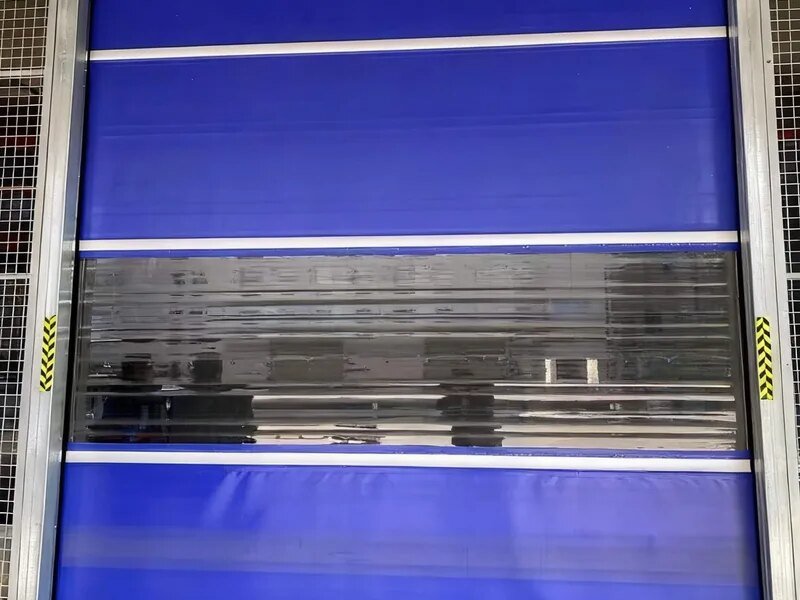
d. Curtain: imported high-density French industrial base fabric (PVC-smooth surface, chemically stable against acid, alkali, oil, and water).
e. Curtain colors: yellow, blue, gray, red, white, and more.
f. View window: made in any style on request.
g. Control system: smart computer-programmed control, compatible with common protection devices.
Drive motor: German-made SEW high-performance brake motor, 220V to 380V, 50Hz, IP55, 0.75 to 1.5 kW, 1500 rpm. Handles heavy loads safely. You can also choose an imported-brand or well-known domestic motor. Domestic motors cost a bit less than imported and offer good value.
Startup methods for the high-speed roller shutter series:
A: Manual button
B: Manual pull cord
C: Remote control
D: Radar
E: Ground induction loop
F: Photoelectric sensor
G: Interlock (two-door interlock)
Price of the wind-resistant automatic high-speed roller shutter depends on the customer’s design and the actual install site. RHidoor offers different install methods and different high-speed shutter configurations. For questions, call +86 18938501256 (ruihua@rhidoor.com).
Related Articles
- High-Speed Roller Shutters vs. Ordinary Roller Shutters
- What to Do When a High-Speed Shutter Won’t Start or Loses Power
- Four Control Methods for High-Speed Roller Shutters
Related Articles
- complete industrial roller shutter guide
- industrial roller shutter types and advantages
- four control methods for high-speed roller shutters
- high-speed vs ordinary roller shutters
- what is a fire-rated roller shutter
Buyers often ask which materials make a good roller shutter. A higher price usually means better raw material, but a better material does not guarantee a better door. What counts is the manufacturer’s quality control during production and installation. Pick an electric roller shutter that fits your actual requirements. More expensive is not always better.
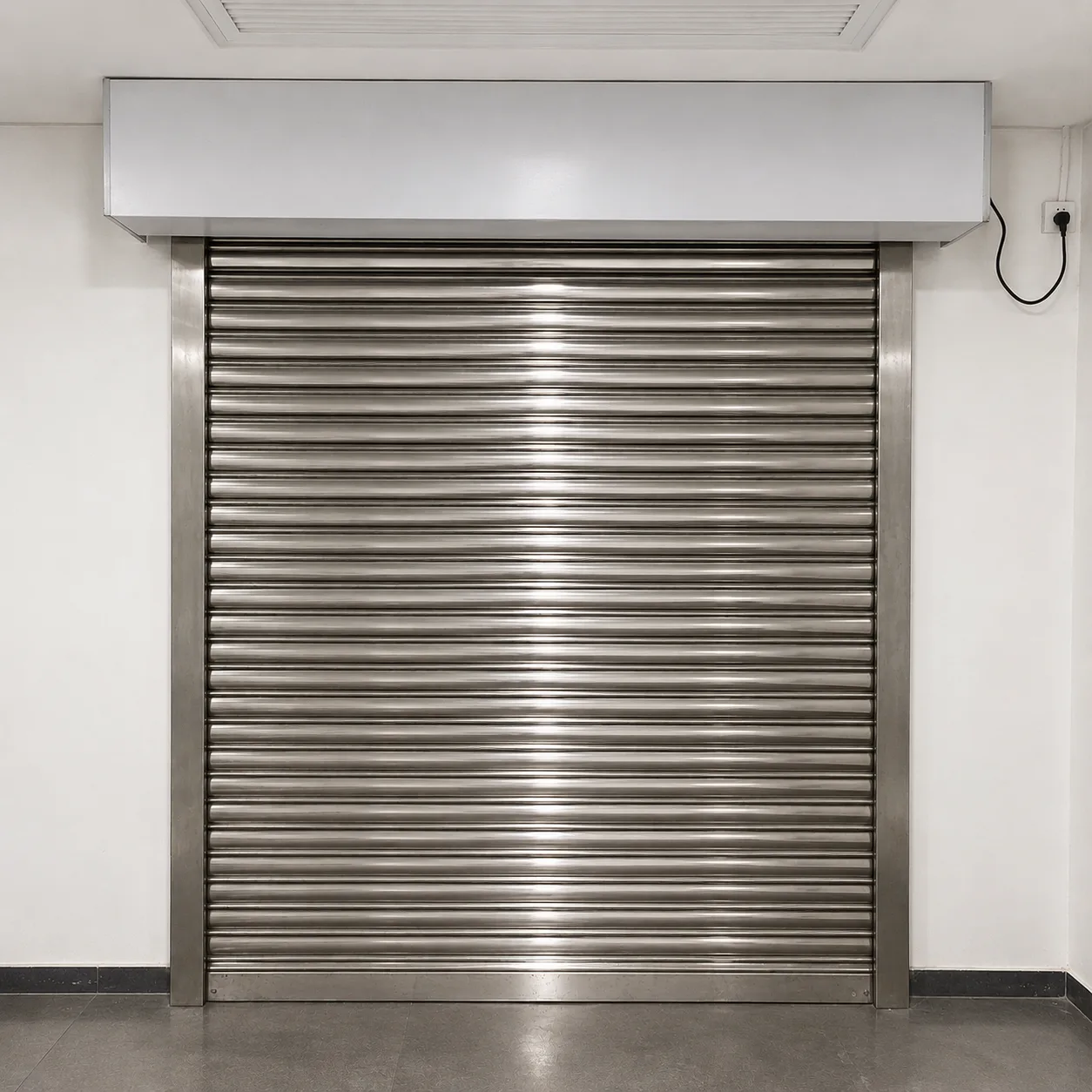
Two main shutter fabric groups
Today’s shutter fabrics fall into two groups: polyester fiber wrapped in PVC, and glass fiber wrapped in PVC. Both share one technical measure of light transmission: the mesh opening rate. That is the share of the fabric taken up by holes, per unit area. Fabrics usually come in 1%, 3%, 5%, 8%, or 10% mesh opening rates for different places and functions.
Installed indoors, a darker fabric of the same mesh rate transmits light and view better; a lighter fabric does the opposite. Used outdoors, a fabric with an aluminum coating or a darker color works better, because the coated fabric reflects more heat and the dark fabric absorbs more.
Pick your electric roller shutter material by use case
The common roller shutter material options you will see on a spec sheet are grid, color steel, aluminum alloy, stainless steel, PVC, and crystal.
- Aluminum alloy roller shutter — The common and traditional type. Strong on looks and eco-friendliness, but its main drawback is noise.
- Color steel roller shutter — Comes in a range of colors. You can choose different panel thicknesses and add window panels or a pass door.
- Grid roller shutter — Breathable and light-transmitting while still theft-resistant. Very modern looking.
- Crystal roller shutter — Made with PC bulletproof-glue crystal slats. Widely used in clothing malls. Very stylish.
- PVC roller shutter — Made from PVC, as the name says. Blocks dust fast and effectively, with strong insulation, warmth retention, and soundproofing.
- Stainless steel roller shutter — Panels made of stainless steel. Glossy surface that resists wear and scratches.
- Fire rated roller shutter — Built for fire and heat isolation at large building openings. The design and installation play a real technical role. Fire rated shutters are used widely in industrial and civil buildings as fire compartments. They stop fire from spreading and protect life and property. They are a necessary fire safety feature in modern buildings.
Fire rated shutter types
The main types of fire rated roller shutter are: composite steel fire shutter (fire and smoke resistant), inorganic premium fire shutter (twin-track, twin-curtain), premium steel water-mist fire shutter, steel composite side-mounted fire shutter, steel composite horizontal fire shutter, inorganic premium folding fire shutter, and various types with pass doors in the curtain.
Among all these materials, fire rated shutter material is the standard choice in building fire safety. Different materials give different shutter styles and fire ratings. RHIDOOR laid out this material list for customers as a reference. We believe you will find the right shutter for your site. To learn more about roller shutters, follow the RHIDOOR website.
Ready to narrow it down? Learn how to pick the right roller shutter material with our step-by-step view. When you know the curtain, browse our roller shutters to see it built.
Related Articles
- Which Material Is Best for Electric Roller Shutters?
- Material Knowledge and Function to Know Before Buying a Fire Rated Roller Shutter
- How to Pick the Right Roller Shutter Material
- Fire Rated Roller Shutter Quality and Where to Install
You don’t need a big order to move fast — we take orders from 1 pc and ship within 15 days, every time.
Ready to upgrade your facility? Let our experts help you find the perfect RHIDOOR solution for your application. Contact Us Today

Related Articles
- complete industrial roller shutter guide
- pick the right roller shutter material
- electric roller shutter material comparison
- choosing electric roller shutter material
- material knowledge for fire-rated roller shutters
- Material showdown: aluminium vs steel
An electric roller shutter comes in several materials: PVC, aluminum alloy, stainless steel, high-speed fabric, folding curtain, and inorganic fire rated cloth. Each electric roller shutter material changes how the door performs and what it costs to maintain. Start with where the shutter will sit and what it must do, then pick the material that fits.

PVC crystal roller shutter
Use a PVC electric roller shutter for an internal passage in a typical factory. PVC costs little, comes in a range of colors, and is easy to replace. If a panel gets hit or torn, swap the curtain and the problem is gone.
Electric roller shutter for outdoor security
Need theft protection at an outdoor opening? Choose a hard electric roller shutter or a high-speed model. The panels are solid and hard to break. They open and close fast and double as a security door.
Folding roller shutter
Have a very large opening that you open and close rarely? A folding roller shutter is worth a look. Keep the material light but sturdy and durable. The material must handle more than the curtain’s actual lifting force, because a shutter motor’s lift capacity drops slowly as it ages.
Lubrication and motor life
Check how well the shutter is lubricated. A good unit sheds heat fast. It runs on an all-gear drive with no chain and no belt, which protects the motor core and extends its life.
Choosing an electric roller shutter still comes down to one rule: match the roller shutter material and type to where you will use it. RHIDOOR laid out this checklist to help you decide. If anything above is unclear, reach out. We will explain in detail and build a shutter to your exact site.
Not sure which curtain fits your site yet? Start with how to pick the right roller shutter material, then read which material is best for electric roller shutters for the final call. Both pair well with the roller shutters we manufacture to order.
Related Articles
- Materials to Consider Before Buying a Roller Shutter
- Which Material Is Best for Electric Roller Shutters?
- Aluminum Alloy Roller Shutter Profiles and Installation
- Quality Requirements for Steel Fire Rated Shutter Curtain Plates and Lintels
RHIDOOR builds to order at MOQ 1 pc with a 15-day lead time, so you get the roller shutter you need without a long wait.
Ready to upgrade your facility? Let our experts help you find the perfect RHIDOOR solution for your application. Contact Us Today
Related Articles
- complete industrial roller shutter guide
- materials to consider before buying a roller shutter
- electric roller shutter material comparison
- best material for electric roller shutters
- material knowledge for fire-rated roller shutters
- Steel or aluminium for your electric shutter?
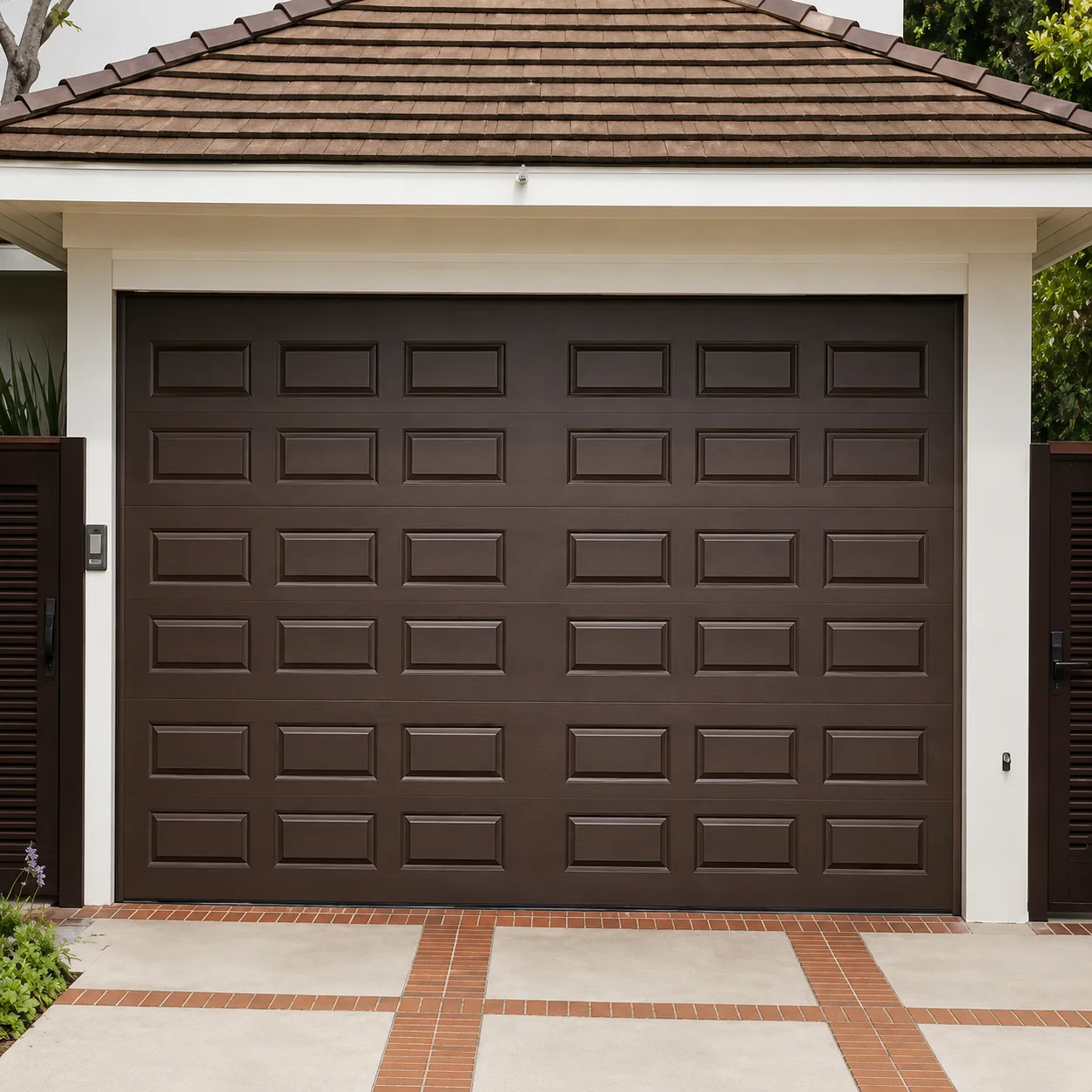
Cars are part of daily life now. They make getting around easy, and a garage door keeps your car safe. Today RHidoor, a garage door manufacturer, will walk you through a remote-control garage door that is easy to use, safe, and good value.
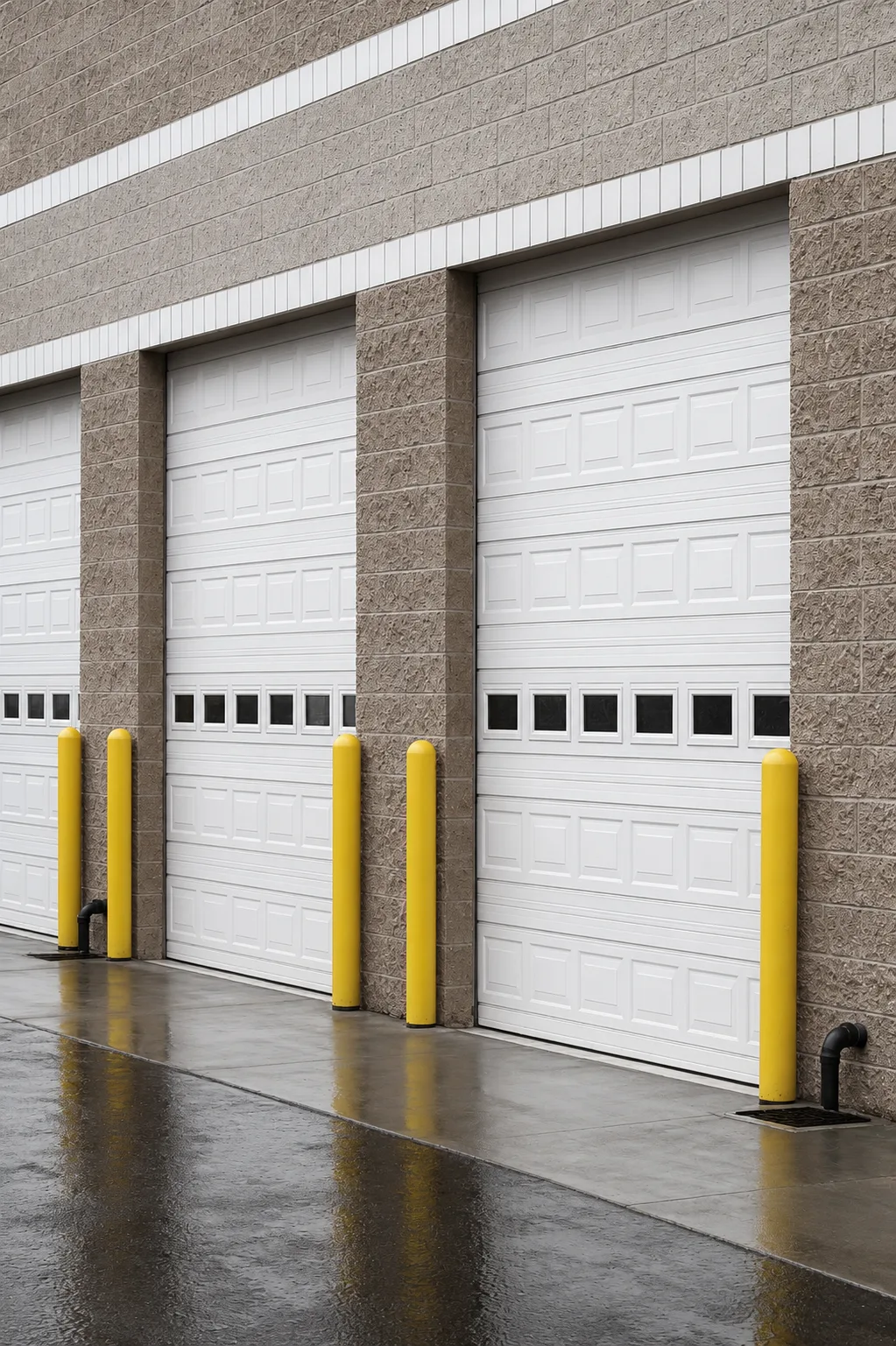
Remote-control garage doors are easy to use. With the remote handset you can:
Set the automatic close function
a. Open the garage door motor cover. Press “+” for over 4 seconds. The display shows “-“, which means you can now set the auto-close function.
b. Press “+” or “-” to adjust the auto-close time. Each press of “+” adds 1 to the display; each press of “-” subtracts 1. A display of “1” means the door closes automatically after 1 minute; “2” means 2 minutes, and so on. A display of “0” cancels the auto-close function. Press “Set” to confirm, and the host enters standby.
c. The auto-close function is off by default.
Electric garage doors are quiet, safe, and eco-friendly:
They are safe and sturdy, built entirely from aluminum alloy panels. They look elegant and clean. There is an emergency lock for power outages. If the door meets resistance it bounces back, protecting people and cars. Insulation, wind resistance, and sealing are all solid.
Villa remote-control garage door materials:
a. Surface treatment uses electrostatic powder coating. It resists corrosion and scratches, is easy to clean, and the color lasts. The painted surface holds up against sunlight, rain, and corrosion. Minor bumps bounce back. If damaged, you can replace a single slat. You can also add light-transmitting profiles between slats so your car gets some sun.
b. Several installation options: external, internal, or mid-mount. Space requirements are low. It does not take up interior garage space. Installation is simple and fast, saving time, and the look is modern and stylish.
New safety tech for garage doors:
a. Safety devices. You can add an infrared sensor system and wireless remote control. The door has its own self-developed automatic roller shutter anti-theft interlock. The door’s own weight provides the theft protection, making it safer.
b. The electric roller garage door runs on an AC tubular motor or an external motor, 220V or 110V. It saves power, is safe and quiet, and has thermal protection. You can fit a UPS backup power supply or a manual chain so the door still works during a blackout.


Related Articles
- Fire-Rated Shutter Control Box: Notes and Wiring
- Repair Methods for Different Roller Shutter Types
- Quick Guide to Pairing Your Roller Shutter Remote
- Fixing Common Garage Door Faults